
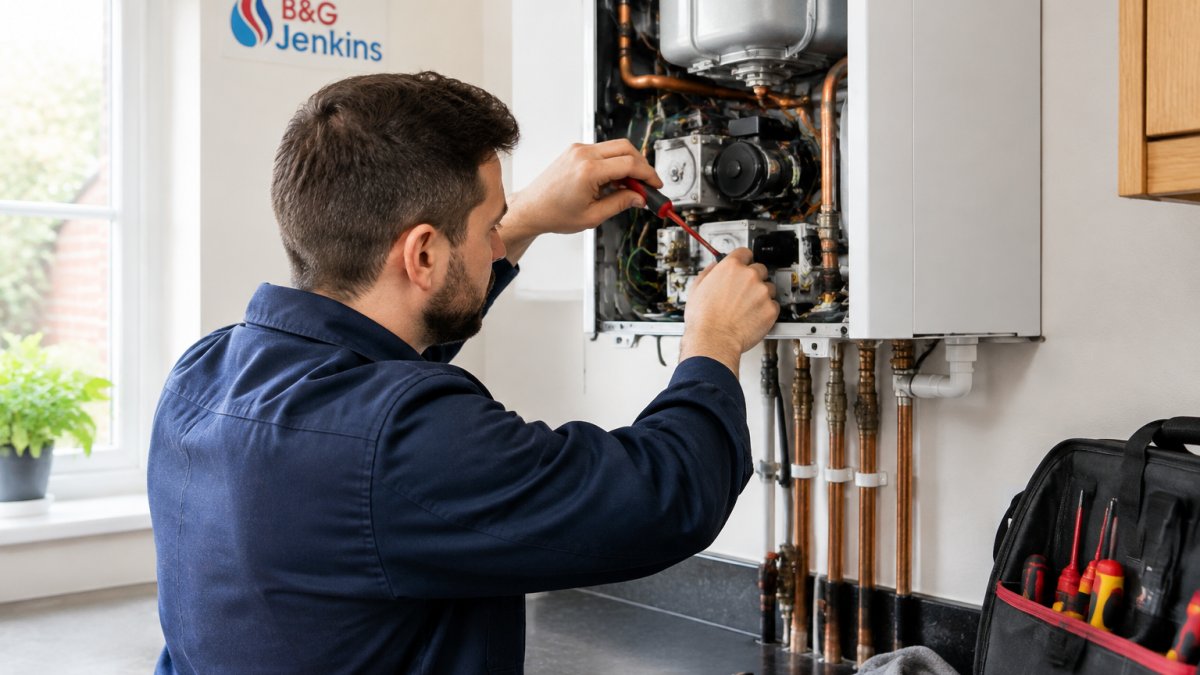
What Should You Do When Your Heating Fails?
Last Updated: November 5, 2026
Quick Summary
Check the thermostat, programmer and consumer unit first, then note any boiler fault code and call a Gas Safe registered engineer for heating repair if the problem persists. If you smell gas or suspect carbon monoxide, get everyone outside and call the National Gas Emergency Service on 0800 111 999.
- Check the thermostat, programmer setting and consumer unit before assuming a breakdown.
- Write down any boiler fault code so the engineer knows where to start.
- Never open the boiler casing; anything inside is a job for a Gas Safe registered engineer.
- Bleed radiators that are cold at the top and warm at the bottom to release trapped air.
- Have the boiler make, model and fault code ready when you call an engineer.
Table of Contents
- Boiler Not Working? What to Do in the First Five Minutes
- Boiler Fault Troubleshooting You Can Do Safely Before Calling
- When to Call an Emergency Heating Engineer in Swindon
- Frequently Asked Questions
Boiler Not Working? What to Do in the First Five Minutes
When your heating fails, the first five minutes of heating repair matter. At B&G Jenkins, we speak with homeowners across Swindon about heating problems every week, and the calmest callers often get their heat back fastest.
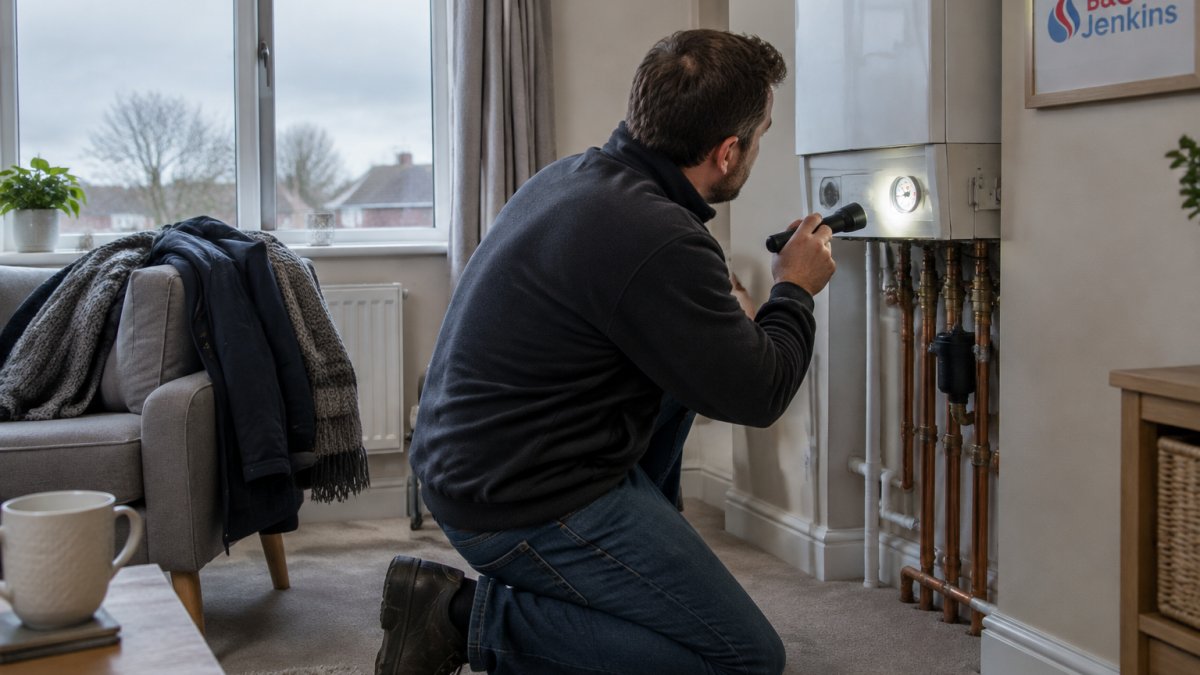
First, check the obvious: is the thermostat calling for heat, is the programmer set to "on" rather than "timed", and has a fuse tripped at the consumer unit? These three checks solve a surprising number of "breakdowns" without an engineer ever leaving the van.
Second, look at the boiler: a blank display means confirm power, and a fault code should be written down, as it tells an engineer exactly where to start.
Third, listen. Gurgling, banging or kettling points to trapped air or limescale, while silence with a live display often means an ignition or gas supply fault, not a DIY job.
One caution: if you smell gas or suspect carbon monoxide, stop immediately. Do not touch electrical switches, open windows and doors, get everyone outside, and call the National Gas Emergency Service on 0800 111 999, as set out by Gas Safe Register guidance on gas emergencies.
Boiler Fault Troubleshooting You Can Do Safely Before Calling
Safe boiler fault troubleshooting comes down to a short list of checks that never involve opening the casing. Anything inside the boiler is a job for a Gas Safe registered engineer, full stop.
- Check the pressure gauge. A reading near the bottom of the green band often means topping up via the filling loop; your manual shows the correct figure.
- Try the reset button. Press it once, wait a few minutes, and see whether the boiler fires. Repeated resets without success mean stop and call.
- Bleed the radiators. Cold at the top and warm at the bottom usually means trapped air; bleeding them is safe and can restore circulation.
- Check the condensate pipe in freezing weather. Warm a frozen plastic pipe gently with a hot water bottle or warm cloth, never a naked flame.
- Confirm the gas supply. If your hob won't light either, the problem sits upstream of the boiler and needs a gas engineer.
Repeatedly resetting a boiler that keeps locking out usually signals a genuine component fault and simply delays the proper fix. For more detailed fault guides, our team publishes ongoing heating and boiler advice covering the codes and symptoms we see most often.
Here are the safe checks you can make yourself before calling an engineer.
| Check | What to look for | What it means |
|---|---|---|
| Pressure gauge | Reading near bottom of green band | Top up via filling loop |
| Reset button | Press once, wait a few minutes | Repeated resets without success mean stop and call |
| Radiators | Cold at top, warm at bottom | Trapped air; bleed them |
| Condensate pipe | Frozen plastic pipe in freezing weather | Warm gently with hot water bottle or warm cloth |
| Gas supply | Hob won't light either | Problem upstream of boiler; needs gas engineer |
When to Call an Emergency Heating Engineer in Swindon
Call an emergency heating engineer immediately if you smell gas, suspect carbon monoxide, have no heat and no hot water in cold weather, or see water leaking from the boiler casing.
A heating engineer is a professional qualified to diagnose and repair boilers, radiators, controls and central heating systems. In the UK, anyone working on a gas appliance must be on the Gas Safe Register, so check an engineer's credentials before booking, ask for that card, and whether the engineer is insured. Checking an engineer’s credentials is also a good time to consider whether an ageing boiler is worth repairing or replacing, a decision Tante Plumbing & Heating can help you think through.
When you call, have three things ready: the boiler make and model, the fault code if there is one, and a clear description of what happened. That lets the engineer arrive with the right parts and gives you a more accurate repair quote.
Watch out: a low call-out fee can be followed by a much larger bill once the engineer is through the door. Ask upfront what any diagnostic charge covers and whether it comes off the repair if you go ahead.
If you've decided to book, our guide on how to get a boiler installation quote in Swindon walks through the questions worth asking, and our piece on finding reliable boiler installers explains what separates a careful engineer from a rushed one.
What happens during an emergency visit
The engineer will first make the situation safe, then run a diagnostic check on the boiler and controls. Ask for a clear explanation of the fault and a quote before any work begins, and discuss whether a repair or replacement makes more sense.
Repair or replace?
Repair usually wins on newer boilers with a single fault. Replacement tends to make more sense on older, inefficient units facing repeated breakdowns, especially where parts are hard to source. We're Worcester boiler specialists, established in 1967, so we'll give you a straight answer rather than a sales pitch. If replacement is on the cards, you can start with an online boiler quote or explore Worcester Bosch boiler installation to see the options we fit.
Frequently Asked Questions
How quickly can an emergency heating engineer attend my home?
Response times depend on the fault, the time of day and how busy the engineers are. When you call, ask for an expected arrival window and whether the visit is classed as an out-of-hours call-out. Before the engineer arrives, keep the boiler switched off if you suspect a gas leak or carbon monoxide, and make sure the boiler and any controls are accessible. If you are unsure who to call, contact our team and we will talk through the fault and the next available visit.
Can I troubleshoot a boiler before calling an engineer?
Yes, some boiler fault troubleshooting is safe to try. Check the thermostat is calling for heat, confirm the programmer is set correctly, look at the boiler pressure gauge and reset the boiler once if the manufacturer's instructions allow it. Do not open the boiler casing, touch gas pipework or keep resetting a boiler that locks out repeatedly. If the fault returns, stop and book a heating repair visit so a gas engineer can diagnose the cause properly.
Is a boiler repair or replacement the better option?
It depends on the age of the boiler, the fault and how often it has broken down. A single failed component on a well-maintained boiler is usually worth repairing. Repeated breakdowns, rising bills or a boiler that no longer meets current efficiency standards may make replacement the more sensible long-term choice. Ask your engineer to explain the fault and the options in plain terms, then request a boiler quote so you can compare repair against replacement before deciding.
When the heating goes down, you want a clear head and a qualified engineer, not guesswork. B&G Jenkins offers Worcester Bosch boiler installation, boiler finance options and an instant online quote tool so you can see indicative pricing for recommended boilers in under two minutes. Get started with B&G Jenkins and get your home warm again.


