
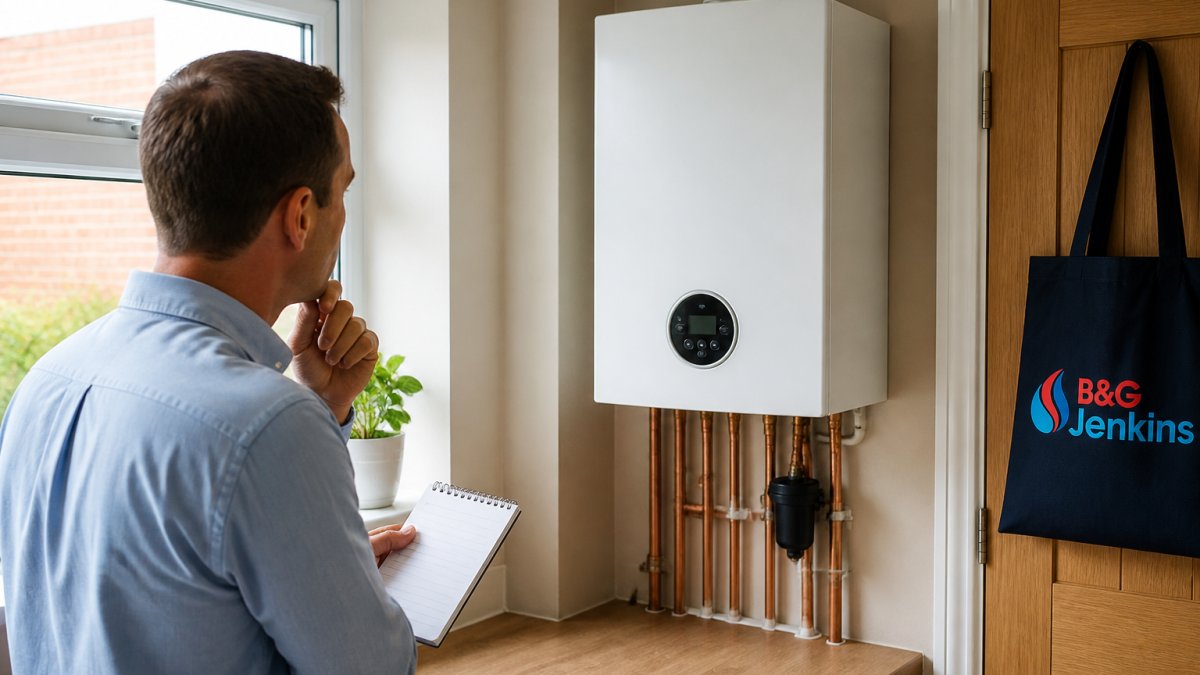
How Do You Calculate What Size Boiler You Need?
Last Updated: 25 October 2026
Quick Summary
To calculate boiler size, start with the bedroom rule of thumb or a boiler size calculator for a rough kW range, then confirm it with a proper heat-loss calculation. For combis, also match the hot water rating to your bathrooms and check your incoming flow rate.
- Boiler size is heat output in kilowatts, not the physical dimensions of the unit.
- The bedroom method gives broad bands, from around 10-15 kW for one bedroom to 30 kW and above for five or more.
- A boiler heat loss calculation adds up room-by-room losses and is more accurate than any rule of thumb.
- Combi hot water ratings are higher than heating ratings because they heat cold water instantly.
- Sizing up just in case causes an oversized boiler to cycle constantly and wear out faster.
Table of Contents
- Why Getting Boiler Size Right Matters
- What You'll Need Before You Start
- Step 1: Estimate Your Boiler Size for Number of Bedrooms
- Step 2: Use a Boiler Size Calculator as a Starting Point
- Step 3: Run a Boiler Heat Loss Calculation
- Step 4: Factor in Combi Boiler Sizing for Hot Water
- Common Mistakes to Avoid When Sizing a Boiler
- Request a Boiler Quote and Let Us Check Your Figures
- Frequently Asked Questions
Why Getting Boiler Size Right Matters
Getting the boiler size wrong is one of the most expensive mistakes a homeowner can make. Too small, and your home never quite warms up on a cold morning. Too large, and you pay for capacity you never use while the boiler cycles on and off.
Boiler size is the measure of how much heat output a boiler can deliver, rated in kilowatts (kW). It is not the physical dimensions of the unit. A boiler that is correctly sized matches your home's heat loss and your hot water demand, nothing more.
At B&G Jenkins, we have fitted Worcester Bosch boilers across the area since 1967, and the sizing question comes up on almost every survey. Here is the honest answer most guides skip: a rough estimate from a calculator is a starting point, not a final figure. Proper sizing should be based on a heat-loss calculation, as Ideal Heating's guidance on boiler sizing sets out.
Why does it matter so much? An oversized combi will short-cycle, wasting gas and adding wear. An undersized one leaves you cold in winter. Either way, you live with the result for years.
If you are also weighing up efficiency upgrades alongside size, our guide to choosing energy efficient heating for home covers how the two decisions fit together.
What You'll Need Before You Start
Before you touch a calculator, gather a few basics. The more accurate your inputs, the more useful your estimate.
Here is what to have ready:
- The number of bedrooms and bathrooms in your home
- Your current boiler's make, model and kW rating, usually on a sticker inside the casing
- A rough idea of wall insulation, glazing and loft insulation
- The number of radiators and their approximate sizes
- Your hot water habits: how many people shower, and when
You do not need to be precise. A rough sketch of the layout helps too. Jot down which rooms feel coldest in winter, because that tells you where heat loss is worst.
One practical tip: photograph the boiler's data plate before you start. It saves a second trip to the cupboard later.
Step 1: Estimate Your Boiler Size for Number of Bedrooms
The bedroom method is the quickest way to get a rough boiler size for number of bedrooms. It is a rule of thumb, not a precise science, but it gives you a sensible starting range.
A common approach looks like this:
- 1 bedroom: around 10-15 kW
- 2 bedrooms: around 15-20 kW
- 3 bedrooms: around 20-25 kW
- 4 bedrooms: around 25-30 kW
- 5 bedrooms or more: 30 kW and above
Treat these as broad bands, not targets. A small two-bed flat with good insulation needs far less than a draughty two-bed cottage with single glazing. Bedroom count ignores how well the building holds heat, which is exactly what really drives the figure.
Use this step to sense-check your thinking. If a calculator later suggests something wildly outside the band, ask why before accepting it.
The bedroom rule of thumb gives a broad starting band for boiler output.
| Bedrooms | Rough boiler size |
|---|---|
| 1 bedroom | Around 10-15 kW |
| 2 bedrooms | Around 15-20 kW |
| 3 bedrooms | Around 20-25 kW |
| 4 bedrooms | Around 25-30 kW |
| 5 bedrooms or more | 30 kW and above |
Step 2: Use a Boiler Size Calculator as a Starting Point
A boiler size calculator takes basic details about your property and returns an estimated kW range. It is faster than doing the sums by hand and a useful cross-check against the bedroom rule.
Most calculators ask for:
- Property type and age
- Number of bedrooms and bathrooms
- Insulation levels
- Window type
- Number of radiators
Feed in honest answers. Rounding up "just in case" skews the result upward, and that is how people end up with an oversized boiler.
The output is an estimate, not a specification. Calculators cannot see your walls, your pipework or how your household actually uses hot water. Use the figure to narrow the field, then confirm it with a proper heat-loss check.
Once you have a rough number, you can see how it translates into an actual installation figure. Our boiler installation quote without a home visit explains how to get an indicative price from that starting point.
Step 3: Run a Boiler Heat Loss Calculation
A boiler heat loss calculation works out how much heat your home loses and, from that, how much output the boiler must replace. This is the method engineers rely on, and it is more accurate than any rule of thumb.
The principle is simple. Every room loses heat through walls, roof, floor, windows and doors. Add up those losses room by room, allow for ventilation, and you have the total heat demand in kW. The boiler must meet that demand on the coldest days.
You can do a simplified version yourself:
- Measure each room's length, width and height
- Note the number of external walls, windows and doors
- Allow for insulation quality and glazing type
- Add a margin for heat lost through ventilation
A full calculation uses standardised U-values for each building element. That is where an engineer's software earns its keep, because the detail matters in older properties.
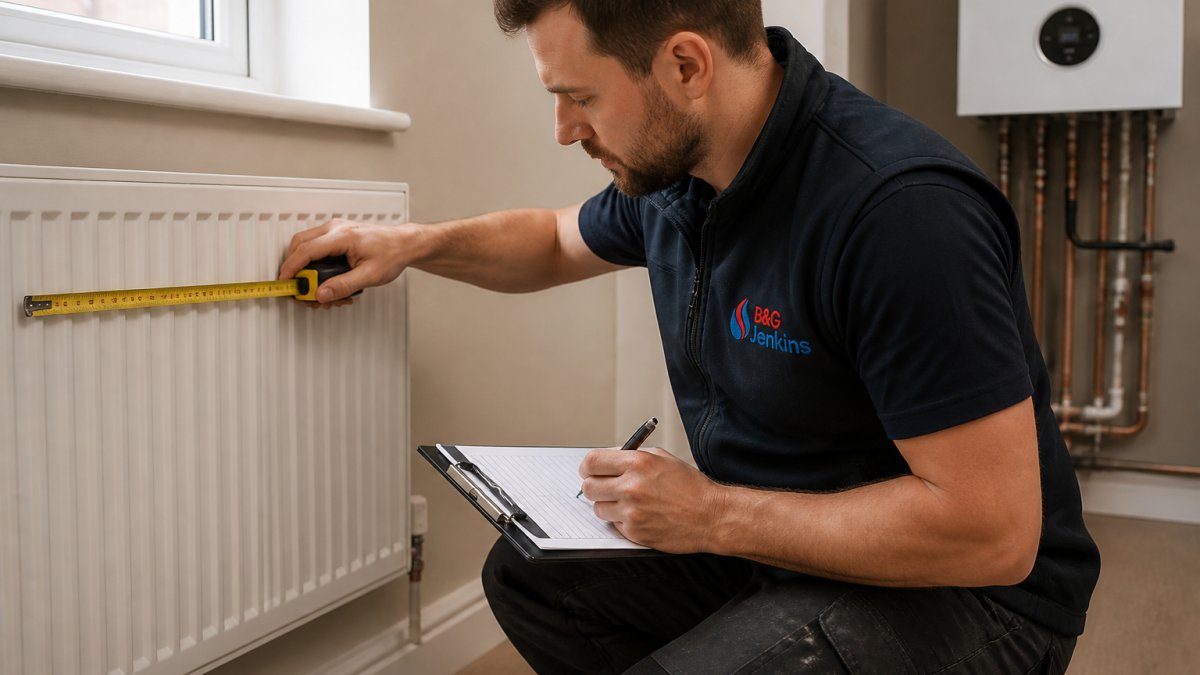
Radiator Output and Room-by-Room Heat Loss
Radiators tell you a lot about what a home actually needs. If you add up the output of every radiator, you get a rough picture of the heat the system was designed to deliver.
Check each radiator's size and type, then look up its output in watts. Add them together to estimate the total. If the existing radiators were sized correctly, the total should sit close to the true heat demand.
This is a useful sanity check, not a substitute for a proper calculation. Radiators get swapped and added over the years, so the total can drift from what the house really needs.
Step 4: Factor in Combi Boiler Sizing for Hot Water
Combi boiler sizing has two jobs to do. The boiler must heat the house and deliver hot water on demand, and the hot water side often decides the final figure.
Combi output is usually quoted as a heating figure and a hot water figure. The hot water rating is higher because it must heat cold water instantly as it flows. That rating determines how many taps and showers you can run at once.
As a rough guide, match the hot water rating to your bathrooms:
- One bathroom: a lower hot water rating is usually enough
- Two bathrooms: step up to cope with simultaneous demand
- Three or more: you may need to look beyond a standard combi
Flow rate matters as much as kW. A powerful combi on a weak incoming mains supply still gives a poor shower. Check the flow rate before you commit.
Common Mistakes to Avoid When Sizing a Boiler
The most common mistake is sizing up "just in case". An oversized boiler costs more to run, cycles constantly and wears out faster. Bigger is not better.
Watch out: sizing on bedroom count alone, without a heat-loss check, is how people end up with a boiler that is wrong for their home. The bedroom method is a starting point, never the final answer.
Other traps to sidestep:
- Ignoring hot water demand when choosing a combi
- Assuming a new boiler can go in at the same size as the old one
- Overlooking poor insulation, which inflates the real heat demand
- Forgetting the incoming flow rate on a combi swap
- Trusting a calculator figure without a survey
A good installer will question an odd result rather than fit whatever the calculator says.
Request a Boiler Quote and Let Us Check Your Figures
Your own estimate is a useful starting point, but the final figure deserves a professional eye. Before you request a quote, it helps to read up on how to find reliable boiler installers so you know what to compare.
At B&G Jenkins, we check your figures against the property itself. We are Worcester Bosch specialists, and we have been fitting and servicing boilers since 1967. We will not push you towards a bigger boiler than your home needs. If the outlay is a concern, our Boiler Finance option lets you spread the cost of a new Worcester Bosch installation, and you can see the full range of Worcester Bosch Boiler Installation choices we offer.
Our instant online quote tool gives you indicative pricing in under two minutes, with no home visit required. If you would rather talk it through, our team is happy to help.
Get started with B&G Jenkins and get a boiler size that fits your home, not the other way round.
Frequently Asked Questions
How do I calculate what size boiler I need?
Start with a rough guide based on your bedrooms, then refine it with a heat loss calculation. Count your radiators and their output, note your wall insulation and glazing, and add the hot water demand if you have a combi. A boiler size calculator gives a starting figure, but a proper heat loss calculation is what confirms the right boiler size for your home.
Does the number of bedrooms determine boiler size?
Only roughly. Bedroom count is a shorthand for floor area and hot water demand, which is why boiler size for number of bedrooms is a common starting point. A one or two-bedroom home often suits a smaller output, while three or more bedrooms usually needs more. But insulation, glazing and bathroom count can shift the figure either way, so treat it as a first estimate, not a final answer.
Can a boiler be too big for a house?
Yes. An oversized boiler cycles on and off more often, which wastes energy and adds wear. It can also struggle to modulate down to low demand in milder weather. Matching output to your actual heat loss and hot water needs keeps the system running efficiently and comfortably, which is why sizing should never be guesswork.
How does hot water demand affect combi boiler sizing?
Combi boiler sizing depends on both heating and hot water. A combi's hot water output is rated by flow rate, so the number of bathrooms and how many taps run at once matters. A home with one bathroom needs less than one with two showers running together. Check the hot water flow rate as well as the central heating output before choosing.
Sizing a boiler is not about guesswork or picking the biggest number on the list. It is about matching output to your home's real heat loss and your hot water needs. Get that right, and you get a warmer home and lower running costs. Get it wrong, and you feel it every winter. B&G Jenkins can check your calculations, recommend the right Worcester Bosch boiler, and give you a clear, no-obligation quote. Get an instant quote today and let us take the guesswork out of your next boiler.


