
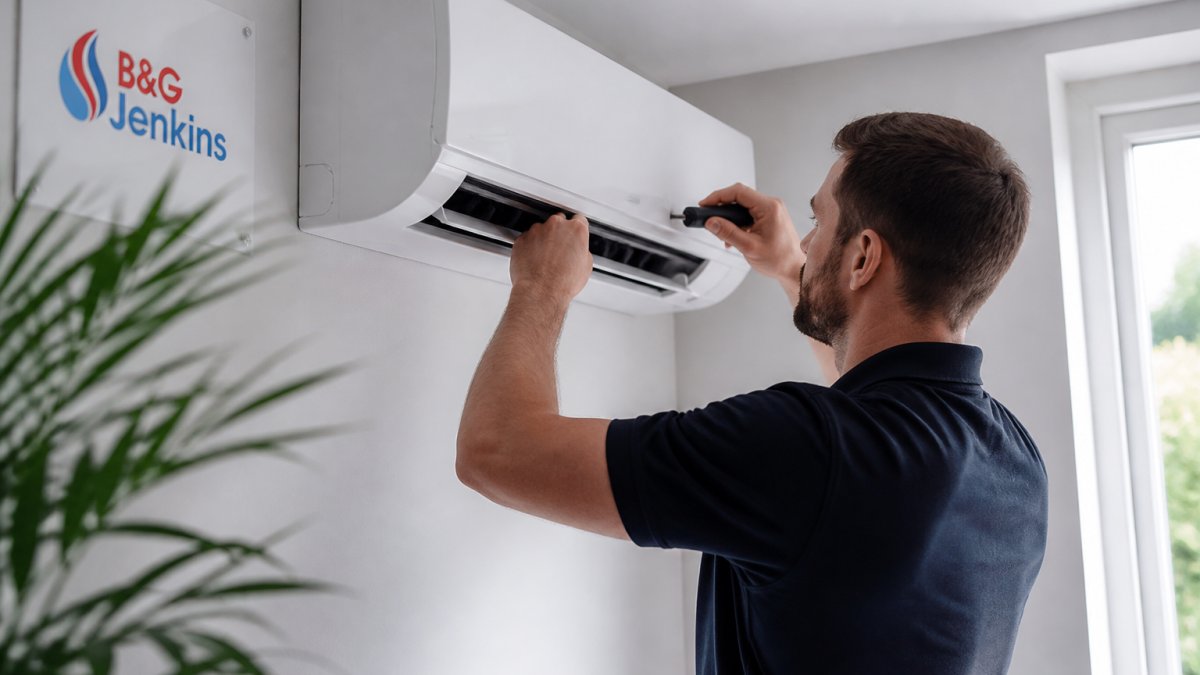
How to Plan Home Air Conditioning Installation
Last Updated: 26 October 2026
Quick Summary
Home air conditioning installation fits an indoor cooling unit, an outdoor condenser and the pipework and wiring that connect them. We survey the room first, then install, test and hand over the system, usually in a single day for one room.
- The National Energy System Operator estimates air conditioning is used in around 3% of UK households.
- A single split system cools one room well without ducting or major building work.
- Air conditioning installation typically takes one day for a single room and two to three days for multiple rooms.
- Place the indoor unit high on an internal wall, away from direct sunlight and not above a bed or sofa.
- The most common mistake is oversizing the unit, which cools too fast and leaves the room clammy.
Table of Contents
- Why Home Air Conditioning Is Worth Considering
- The Best Air Conditioning for Homes: System Types Compared
- What Happens During the Air Conditioning Installation Process
- How Long Does Air Conditioning Installation Take?
- Getting Air Conditioning Unit Placement Right
- What to Ask Before You Book an Installer
- Common Installation Mistakes to Avoid
- Request Your Air Conditioning Survey from B&G Jenkins
- Frequently Asked Questions
Why Home Air Conditioning Is Worth Considering
Home air conditioning installation in Swindon starts with one honest question: do you actually need it? Cooling remains uncommon in UK homes. The National Energy System Operator estimates air conditioning is used in around 3% of UK households, according to Energy Demand Research Centre research on air conditioning adoption. That figure is rising as summers get hotter and home working keeps more people indoors during the day.
At B&G Jenkins, we fit air conditioning across the Swindon area and see the same pattern each year. More homeowners want a cool room to sleep in, not a fully cooled house.
The benefits are straightforward:
- Comfort during heatwaves in bedrooms and living rooms
- Better sleep when overnight temperatures stay high
- Cooling for home offices where equipment adds heat
- Air filtration on many modern units, which helps allergy sufferers
- Heating in shoulder seasons from systems that run in reverse
Air conditioning installation is the process of fitting an indoor cooling unit, an outdoor condenser, and the pipework and wiring that connect them. Done properly, it is quiet, tidy and simple to live with.
If you are also weighing up heating options, our guide to choosing energy efficient heating for home sets out how cooling fits alongside a new boiler or heat pump.
The Best Air Conditioning for Homes: System Types Compared
The best air conditioning for homes is a split system, because it cools one room well without ducting or major building work. Most UK homes suit a single split unit in a bedroom or living room, with more units added later if needed.
Here is how the main options compare:
| System type | Best for | Key trade-off |
|---|---|---|
| Single split | One room, such as a bedroom | One indoor unit per outdoor unit |
| Multi-split | Two to five rooms | Larger outdoor unit, more pipework |
| Wall-mounted unit | Most rooms, easiest fit | Visible on the wall |
| Ceiling cassette | Open-plan spaces | Needs ceiling void space |
| Concealed ducted | Whole-house cooling | Best fitted during renovation |
Wall-mounted splits are the workhorse choice. They are the cheapest to fit, the easiest to service, and the least disruptive to install.
Multi-split systems suit households cooling several rooms from one outdoor unit. They cost more up front but avoid a garden full of condensers.
Ducted and concealed systems give the cleanest look. A recent case study on concealed air conditioning installation shows indoor units hidden in ceiling voids, but this route makes most sense during a renovation when ceilings are already open. Ensuring these units perform efficiently requires you to calculate system load to match the cooling capacity precisely to your home's specific thermal requirements.
What Happens During the Air Conditioning Installation Process
The air conditioning installation process usually runs in a single day for one room. A survey comes first, then the unit goes up, the pipework runs outside, and the system is tested and handed over.
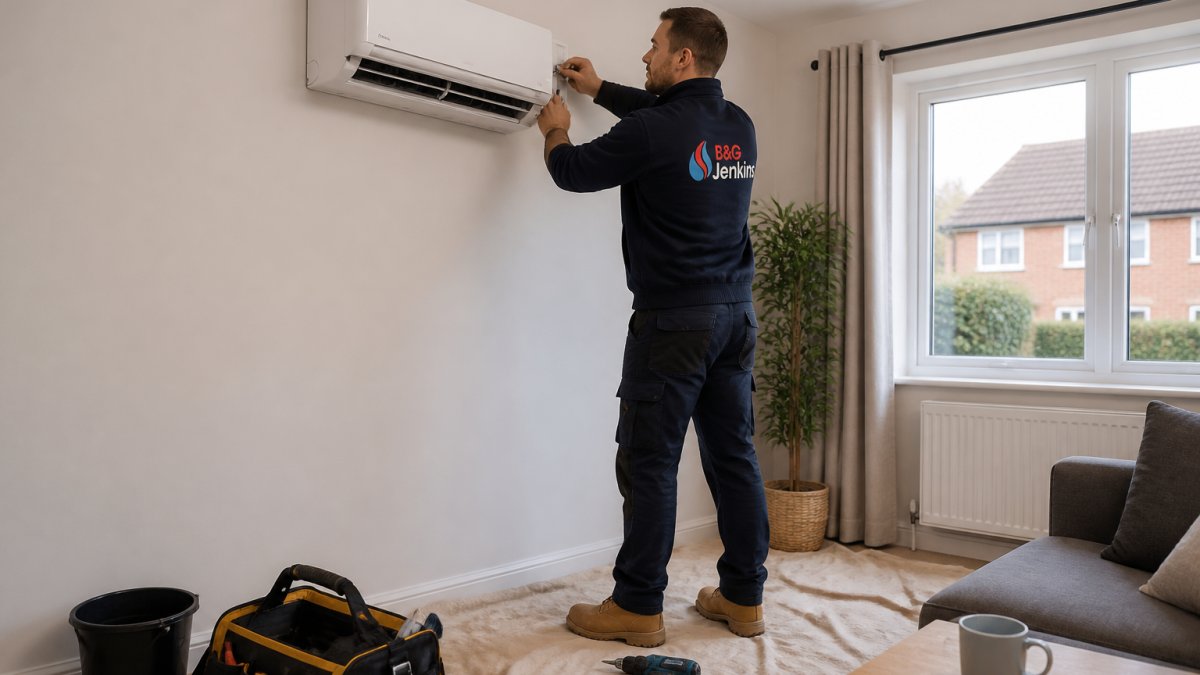
Expect these stages:
- Survey. We check the room size, wall construction, and where the outdoor unit can sit.
- Protection. Dust sheets go down and furniture is moved clear.
- Bracket and core hole. The indoor bracket is fixed and a hole is drilled for pipework.
- Pipework and cable. Refrigerant lines, drainage and power run to the outdoor position.
- Outdoor unit. The condenser is mounted on brackets or a ground stand.
- Commissioning. The system is pressure tested, vacuumed, filled and run.
- Handover. You get a walkthrough of the controls and the paperwork.
The messiest part is the core hole through the wall. A good installer uses a dust extraction kit, which keeps the room clean.
How Long Does Air Conditioning Installation Take?
Air conditioning installation time is typically one day for a single room, and two to three days for a multi-room system. A straightforward bedroom unit can be done in half a day.
The variables that stretch the job:
- Cable runs to the consumer unit, which may need an electrician
- Wall type, as solid stone or render takes longer to drill
- Outdoor unit access, especially where a ladder or scaffold is needed
- Pipe runs, which get longer when the condenser sits far from the indoor unit
- Multiple rooms, which multiply the work
Planning permission is rarely needed for a domestic unit, but flats and conservation areas can differ. Check with the local planning authority before booking if your property is listed or in a conservation area.
Getting Air Conditioning Unit Placement Right
Air conditioning unit placement decides how well the system works and how it looks. Get it wrong and you will fight poor airflow, noise and condensation for years.
For the indoor unit:
- High on an internal wall, with clear space above and below
- Away from direct sunlight, which makes the unit work harder
- Not above a bed or sofa, where cold air drops on people
- Away from heat sources such as cookers or radiators
For the outdoor unit:
- Shaded and well ventilated, never boxed in
- Away from bedroom windows, to keep noise down
- On a solid base or wall brackets, clear of the ground
- Accessible for servicing, with room to work
What most guides miss is the condensate drain. Water has to go somewhere, and a poorly planned drain either drips down a wall or freezes in winter. Plan the route before the hole is drilled.
What to Ask Before You Book an Installer
Ask three things before you book: what is included, who will do the electrical work, and what happens after the install. Clear answers separate a careful installer from a rushed one.
Your checklist:
- Is the survey free and no-obligation?
- Is the electrical connection included in the quote?
- Which refrigerant does the unit use, and is it current?
- What warranty comes with the unit and the labour?
- Will you show me the drain route and outdoor position first?
- Can I see the commissioning paperwork at handover?
- What is the servicing arrangement, and is it optional?
That last point matters. You should never feel locked into a maintenance contract to get a repair. Ask directly.
For boiler work alongside your cooling plans, our guide on how to find reliable boiler installers covers the same vetting questions.
Common Installation Mistakes to Avoid
The most common mistake is oversizing the unit. A system that is too big cools the room too fast, switches off, and leaves the space clammy. Right-sizing beats raw power every time.
Other mistakes we see:
- Skipping the survey, then finding the outdoor unit has nowhere sensible to go
- Poor drain planning, leading to damp patches or icy drips
- Blocking the outdoor unit with fencing or planting, which kills airflow
- Using unqualified fitters for the refrigerant work, which affects the warranty
- Ignoring the electrical supply, which adds cost and delay later
Watch out: a cheap quote that leaves out the electrical connection or the commissioning certificate often ends up costing more than a proper one. Ask what is excluded, not just what is included.
Once your system is in, a little care keeps it running well. Our residential air conditioning maintenance tips cover filter cleaning, seasonal checks and what to do before the first hot spell.
Request Your Air Conditioning Survey from B&G Jenkins
Every good installation starts with an honest survey, not a sales pitch. We look at the room, the walls, the outdoor space and your power supply, then tell you what will actually work.
B&G Jenkins has fitted heating and cooling systems around Swindon since 1967. We fit air conditioning and Worcester Bosch boilers, and we can talk through heat pumps if you want a single system for year-round comfort. Our online quote tool gives you indicative pricing in under two minutes, with no obligation.
We will tell you if you do not need a unit. That is part of the job.
Get started with B&G Jenkins and book a free, no-obligation air conditioning survey for your home.
Frequently Asked Questions
Can air conditioning be installed in an existing home?
Yes. Most homes can take a system without major structural work. The main considerations are where the indoor units go, where the outdoor condenser sits, and how the pipework runs between them. In older properties, installers often route pipework through lofts, cupboards or along external walls to keep disruption low. A survey will confirm what is practical for your layout before any work is agreed.
How long does air conditioning installation take?
A single-room system is usually completed in a day, while a multi-room setup can take two to three days depending on the number of indoor units and how complex the pipework runs are. Older properties with solid walls or awkward access can add time. Your installer should give you a clear schedule after the survey, so you know how long to plan for.
Where should an air conditioning unit be placed?
Indoor units work best high on a wall where cooled air can circulate freely, away from direct sunlight and not blowing straight onto seating or beds. Outdoor condensers need a spot with good airflow, ideally shaded, and positioned so noise does not sit right outside a neighbour's window. Placement affects both comfort and running costs, so it is worth agreeing locations at the survey stage.
Does home air conditioning need regular maintenance?
Yes. Filters need cleaning every few months, and a professional service once a year keeps the system running efficiently and catches small issues before they become expensive. Well-maintained systems also hold their cooling performance better over time. Ask your installer what servicing they offer and whether you can book a one-off visit rather than committing to a long contract.
The hardest part of home cooling is not the fitting. It is knowing which system suits your rooms, your walls and your budget before anyone drills a hole. B&G Jenkins can take that decision off your hands with a free survey, honest advice on system types, and a clear written quote. Get started with B&G Jenkins and request your survey today.


