
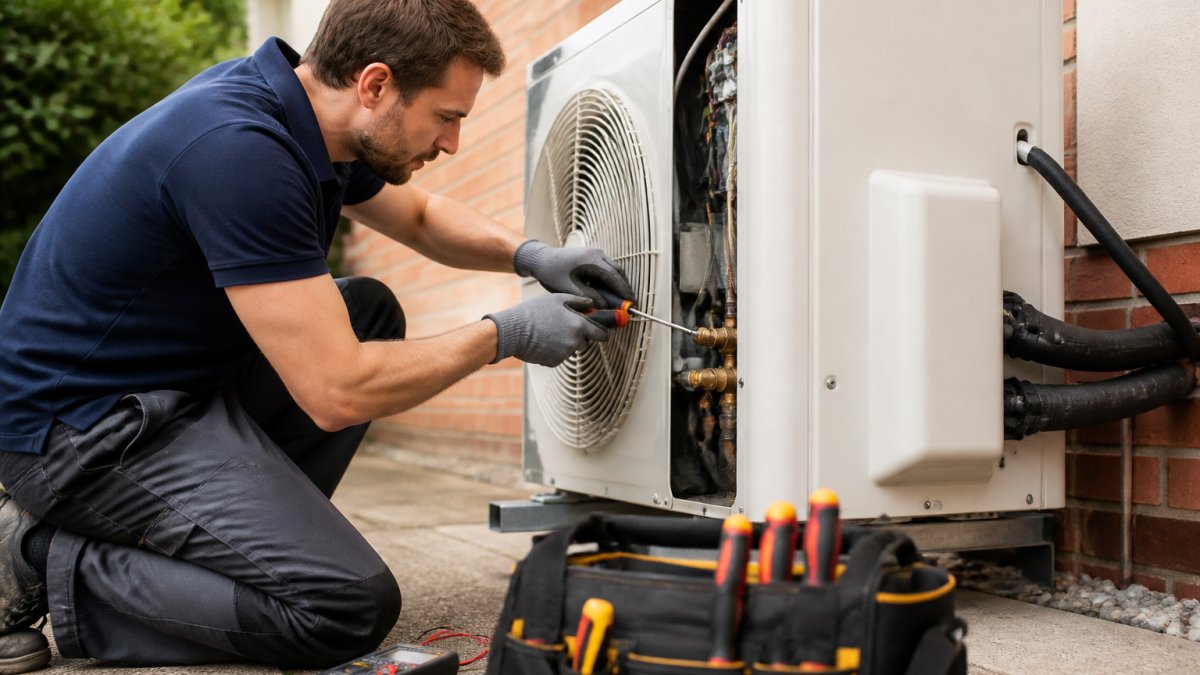
Residential Air Conditioning Maintenance Tips for Homeowners
Table of Contents
- Why Residential Air Conditioning Maintenance Matters
- Your Home Air Conditioning Maintenance Checklist
- How Often to Service Home Air Conditioning
- Air Conditioning Filter Cleaning and Replacement
- Signs an Air Conditioner Needs Servicing
- Common Maintenance Mistakes to Avoid
- When to Call a Professional
- Frequently Asked Questions
Last Updated: 18 October 2026
Why Residential Air Conditioning Maintenance Matters
A well-maintained air conditioning unit costs less to run and lasts longer. That is the short version. This guide from B&G Jenkins covers the practical steps homeowners can take to keep a home cooling system working properly year after year.
Residential air conditioning maintenance is the routine care that keeps a home cooling system running safely and efficiently. It covers filter cleaning, coil checks, and an annual service by a qualified engineer. Skip it, and the unit works harder for the same result.
The core problem is simple. Most homeowners only think about their air conditioning when it stops working. By then, small issues have become expensive ones.
Below, we'll show you exactly what to check, how often to do it, and when to call in a professional.
Your Home Air Conditioning Maintenance Checklist
A good home air conditioning maintenance checklist is short enough to actually follow. Ours has six items, and most take minutes rather than hours.
Here is what matters most:
- Clean or swap the filters every few weeks in peak season
- Clear the outdoor unit of leaves, dirt and obstructions
- Check the condensate drain for blockages
- Look at the coils for visible dirt build-up
- Test the thermostat against a room thermometer
- Book an annual service with a qualified engineer
A common mistake is treating this as a once-a-year job. Filters need attention far more often than that. The rest can wait for a seasonal check.
How Often to Service Home Air Conditioning
Home air conditioning should be serviced once a year by a qualified engineer, with filter checks every two to four weeks during heavy use. Homes in dusty areas or with pets need more frequent attention. A unit that runs all summer needs more care than one used a few weeks a year.
So how often to service home air conditioning depends on use. Light use means an annual service is enough. Heavy, daily use across a long summer calls for a mid-season check too.
Seasonal Timing: Spring and Autumn
Spring is the best time for a full service. The unit gets checked before the hot months, when you actually need it.
Autumn is the second window. A service then clears out the summer's dust and catches wear before winter storage.
Two visits a year suit most homes. One is the minimum. Doing nothing is how small faults turn into failed units.
Air Conditioning Filter Cleaning and Replacement
Filter care is the single most important task on this list. A clogged filter restricts airflow, which makes the unit work harder and cool less. Clean filters mean better cooling and lower running costs.
Clogged filters are the most common cause of poor performance we see. Homeowners often blame the unit when the filter is the real problem.
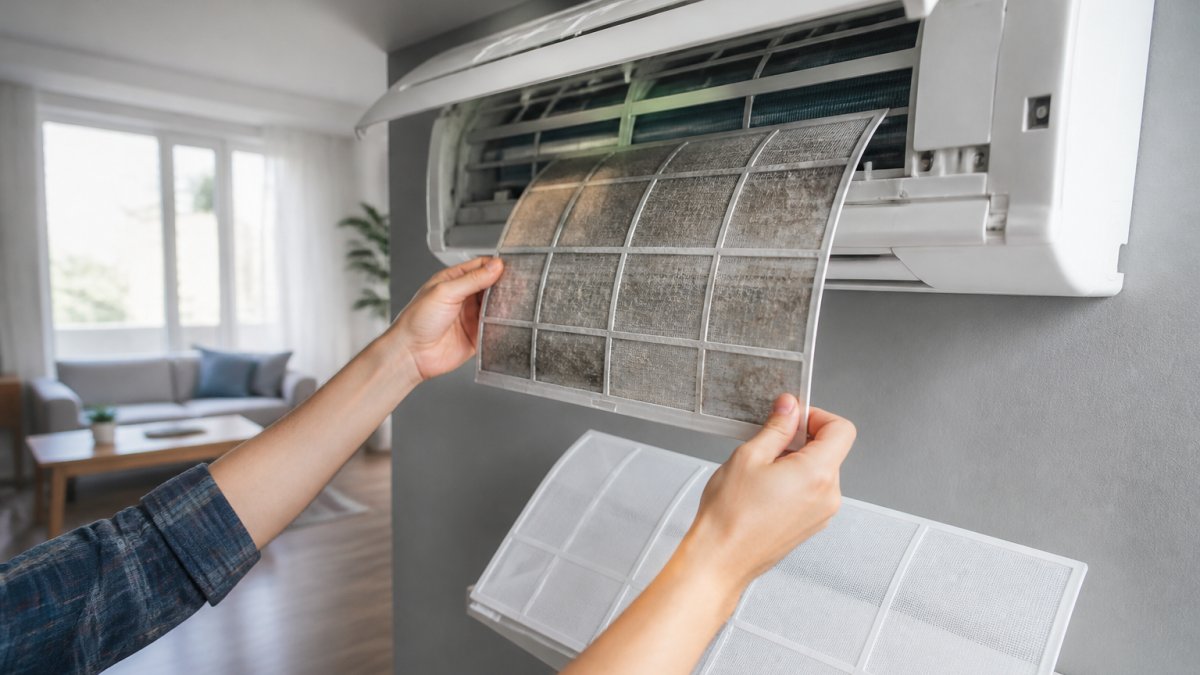
Cleaning Reusable Filters
Reusable filters are easy to clean and save money over time. Here is the routine:
- Switch the unit off at the isolator
- Slide the filter out of the indoor unit
- Rinse it under lukewarm water to clear dust
- Use a soft brush for stubborn build-up
- Let it dry fully before refitting
- Never refit a damp filter
Disposable filters simply get swapped for new ones. Check the manual for the right size, and keep a spare set on hand.
Air conditioning filter cleaning and replacement should happen every two to four weeks in summer. That single habit prevents most avoidable breakdowns.
Signs an Air Conditioner Needs Servicing
Watch for these signs that an air conditioner needs servicing. Catching them early keeps small faults from becoming costly failures.
- Weak airflow from the vents
- Warm air instead of cold
- Strange noises such as rattling or grinding
- Water leaks or pooling near the indoor unit
- Musty smells when the unit runs
- Higher energy bills with no change in use
- Frequent cycling on and off
Any one of these is a prompt to act. Two or more together mean stop using the unit and call an engineer.
Most guides miss the simplest signal: a unit that used to cool a room quickly but now takes far longer. That slow decline is often the first real warning.
Common Maintenance Mistakes to Avoid
The biggest maintenance mistake is doing nothing and hoping for the best. The second is doing the wrong things yourself.
Here is what to avoid:
- Ignoring the filter until cooling drops off
- Hosing down the outdoor unit and soaking electrical parts
- Blocking the outdoor unit with plants, bins or fencing
- Skipping the annual service to save a little money
- Attempting gas or electrical work without training
A blocked outdoor unit cannot shed heat. In practice, this means a unit that runs constantly but never cools the home properly.
When to Call a Professional
Call a professional for anything involving refrigerant gas, electrical components, or a fault you cannot trace. These jobs need training, tools and certification. They are not DIY tasks.
At B&G Jenkins, we handle air conditioning installation and servicing for homeowners across the Swindon area. Our engineers can diagnose a fault, service the unit, and advise on whether a repair or replacement makes more sense.
Some jobs clearly need an expert:
- No cold air despite a clean filter
- Refrigerant leaks or a unit that ices up
- Electrical faults or tripping breakers
- Water leaks from the indoor unit
- Any gas work, which is legally restricted to qualified engineers
If you are unsure, a quick call settles it. Better a short conversation now than a failed unit in a heatwave.
Frequently Asked Questions
How often should home air conditioning be serviced?
A professional service once a year suits most homes, ideally in spring before the cooling season starts. If your system runs heavily through summer or you have pets, a second check in autumn helps. Between visits, clean or replace filters every four to eight weeks during peak use. Regular servicing keeps the system running efficiently and catches small faults before they become expensive repairs.
What air conditioning maintenance can I do myself?
You can safely handle several tasks: clean or replace filters, wipe down indoor vents and grilles, clear leaves and debris from around the outdoor unit, and check the remote and batteries. Keep the area around the outdoor condenser clear of obstructions. Anything involving refrigerant, electrical components or dismantling the unit should be left to a qualified engineer, as handling these parts without training is unsafe and can void warranties.
Can I run my air conditioner if the filter is dirty?
You can, but it costs you. A clogged filter restricts airflow, so the system works harder to cool the same space, raising energy use and putting strain on components. It also reduces air quality and can lead to frost build-up on the indoor coil. If the filter looks visibly grey or clogged, clean or replace it before running the system for any length of time.
What are the signs that my air conditioner needs professional maintenance?
Book an engineer if you notice weak airflow, warm air from the vents, unusual rattling or grinding noises, water pooling around the indoor unit, musty smells, or the system short-cycling on and off. Rising energy bills without a change in usage can also point to a struggling unit. Any of these signs means it is worth getting a qualified engineer to inspect the system rather than waiting.
Keeping a home cool should not be a constant worry. If your unit is struggling, or you simply want it checked before summer, B&G Jenkins can help. We offer expert air conditioning servicing and installation, free no-obligation estimates, and an instant online quote tool that gives you indicative pricing in under two minutes. Get an instant quote from B&G Jenkins and keep your home comfortable all year.

