
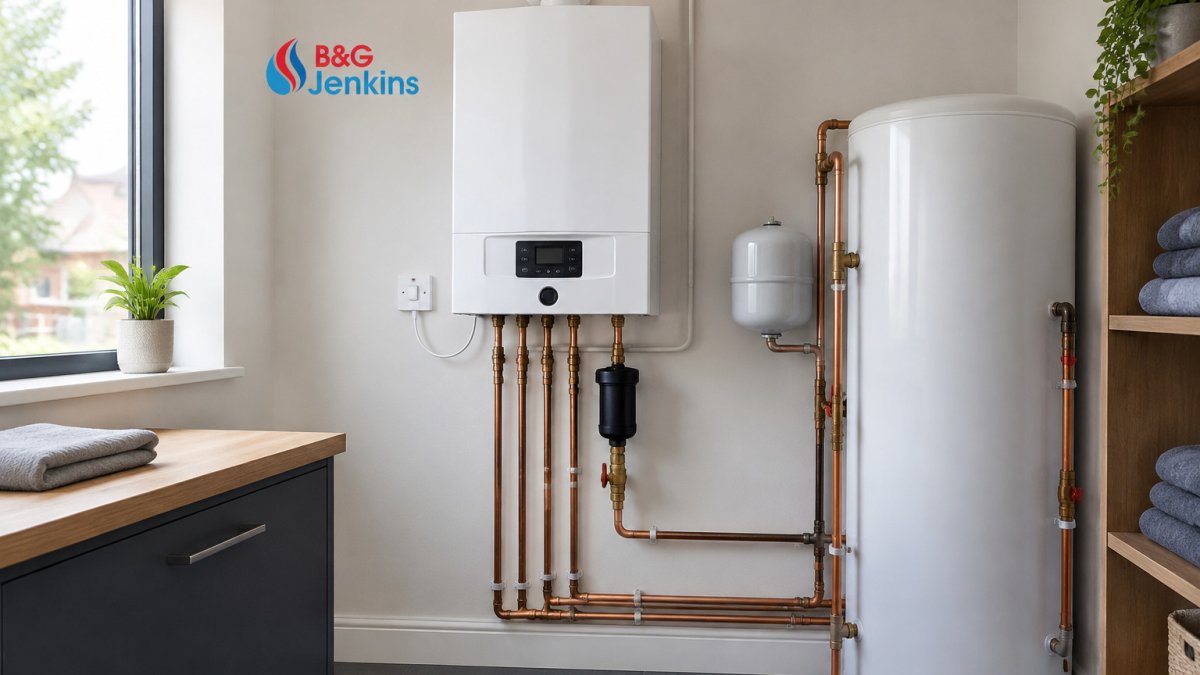
Can a System Boiler Work Without a Hot Water Cylinder?
Last Updated: November 14, 2026
Quick Summary
No, a system boiler cannot work without a hot water cylinder. It heats your radiators directly but has no diverter valve, so it heats stored water in a cylinder coil instead, remove the cylinder and you lose domestic hot water entirely.
- A combi boiler contains a diverter valve that switches output between heating and hot water on demand.
- A system boiler stores hot water in a cylinder; a combi heats water on demand with no cylinder at all.
- A combi's weak point is simultaneous demand, while a system boiler's weak point is space and recovery time.
- Converting a system boiler to a combi is possible and common, but it is not a straight swap of one box for another.
- An unvented cylinder is pressurised and must be installed by a competent installer, not as a DIY fit.
Table of Contents
- Why a System Boiler Needs a Hot Water Cylinder
- System Boiler vs Combi Boiler and Converting to a Combi
- Choosing Between a System Boiler with Vented or Unvented Cylinder
- Frequently Asked Questions
Why a System Boiler Needs a Hot Water Cylinder
No, a system boiler cannot work without a hot water cylinder. It heats your radiators and, separately, heats water stored in a cylinder, remove the cylinder and you lose domestic hot water entirely. This guide explains why, and what your options are.
A combi boiler contains a diverter valve that switches its output between heating and hot water on demand. A system boiler has no diverter valve, it heats water in the central heating circuit and in the cylinder coil, and the cylinder does the rest.
As the Energy Saving Trust's guide to boiler types sets out, system boilers use a separate hot-water cylinder. That is not a quirk. It is how the appliance is designed.
So a system boiler provides heating directly and hot water indirectly. Remove the cylinder and it still heats the radiators, it just has nowhere to put the hot water.
For more background, our heating and boiler advice covers cylinders, controls and system layouts in more detail.
System Boiler vs Combi Boiler and Converting to a Combi
A system boiler stores hot water in a cylinder; a combi heats water on demand with no cylinder at all. Neither is better in every home, the right choice depends on your bathrooms, water pressure and how many people draw water at once.
System boiler vs combi boiler comes down to practical differences:
| Feature | System Boiler | Combi Boiler |
|---|---|---|
| Hot water storage | Separate cylinder required | None, heated on demand |
| Simultaneous demand | Strong, feeds multiple outlets | Weakens with each open tap |
| Space needed | Cylinder or tank cupboard | Wall space only |
The combi's weak point is simultaneous demand: run a shower and open a hot tap downstairs and the shower flow drops. In a one-bathroom household that rarely matters; in a home with two or three bathrooms, it usually does. The system boiler's weak point is space and recovery time.
Can you convert a system boiler to a combi?
Yes, conversion is possible, and it is a common job. It is not a straight swap of one box for another, though.
That last point catches people out. A combi needs a decent cold mains supply to work well. If your incoming flow rate is poor, a combi can disappoint, and a system boiler may have been the better fit all along.
Our guide on which boiler type is best for your home compares system, combi and heat-only boilers side by side.
Choosing Between a System Boiler with Vented or Unvented Cylinder
A system boiler pairs with either a vented or an unvented cylinder. Vented cylinders rely on a cold-water tank in the loft and gravity. Unvented cylinders run directly off the cold mains and deliver mains-pressure hot water.
A system boiler with a vented cylinder is the traditional setup: a loft tank feeds the cylinder and gravity pushes water to the taps. It is simple and reliable, but hot-water pressure is modest and you need loft space.
A system boiler with an unvented cylinder takes its supply straight from the cold mains. Hot water comes out at mains pressure, which suits powerful showers and multiple bathrooms. There is no loft tank, but the cylinder itself is pressurised and needs proper installation and safety controls. Because the cylinder is pressurised, hot water cylinder installation must include the right safety controls and be carried out with care.
Watch out: an unvented cylinder is not a DIY fit. It is a pressurised vessel and must be installed correctly, with the right safety devices, by a competent installer, getting this wrong is a genuine safety issue.
Our guide on getting a boiler installation quote walks through the process step by step.
Sorting out whether your home needs a system boiler or a combi shapes everything else: your hot water, your space and how well your bathrooms perform. If you are weighing up a replacement, our Worcester Bosch Boiler Installation service covers boiler options for your home, and Boiler Finance is available if you would rather spread the cost.
Frequently Asked Questions
Can a system boiler work without a hot water cylinder?
No. A system boiler is designed to heat water that is stored in a separate hot water cylinder. Without that cylinder, the boiler can still run the central heating, but it has nowhere to send heated water for domestic hot water use. If your cylinder is missing, disconnected or faulty, you will not get hot water from taps until it is repaired or replaced. A qualified installer can advise on the right fix for your home.
Can you convert a system boiler to a combi boiler?
You cannot convert an existing system boiler into a combi boiler; they are different appliances. What you can do is replace the system boiler with a combi boiler, which heats water on demand and removes the need for a cylinder. This is a bigger job that involves changes to pipework and checking your mains water pressure and flow rate. An installer should assess whether a combi suits your household size and hot-water demand before you commit.
Does a system boiler need an unvented cylinder?
A system boiler needs a cylinder, but it can be either vented or unvented. An unvented cylinder takes water directly from the cold mains and supplies hot water at mains pressure, which suits homes with multiple bathrooms and good water pressure. A vented cylinder relies on a cold-water tank in the loft and gravity, so pressure is lower. The right choice depends on your water pressure, flow rate and available space. An installer can check which option fits your property.


