
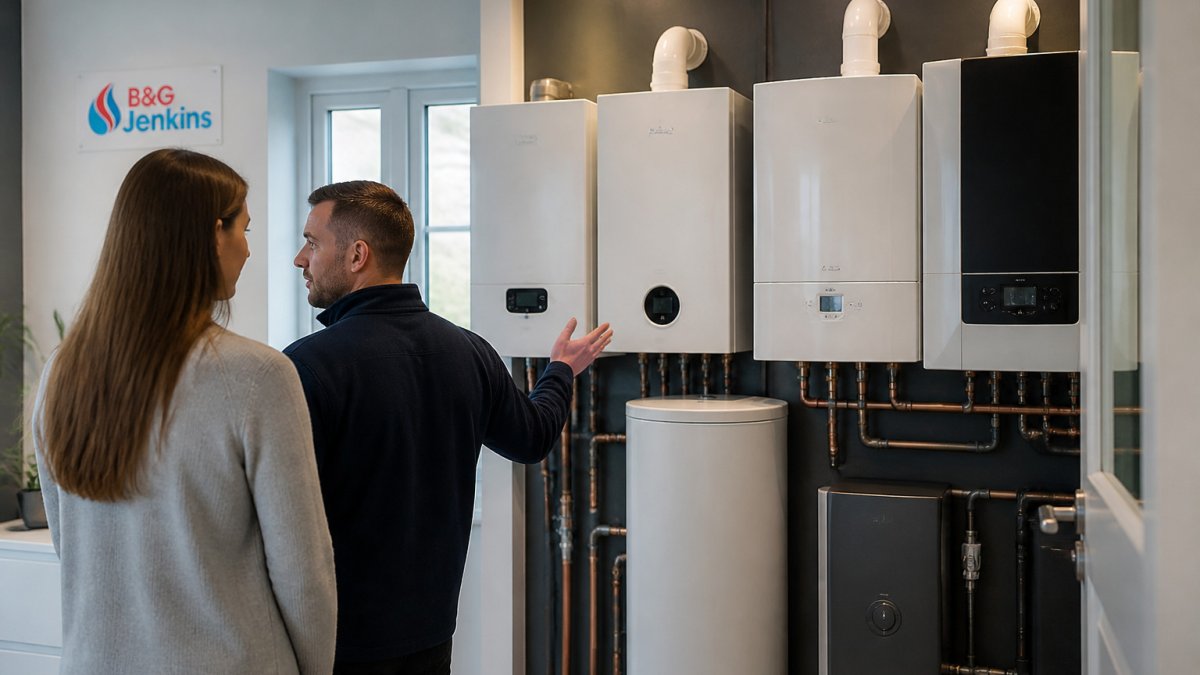
Which Boiler Type Is Best for Your Home?
Last Updated: 1 November 2026
Quick Summary
The best boiler type depends on your home and how you use hot water. A combi suits smaller homes and flats with modest demand, a system boiler suits homes with several bathrooms, and a regular boiler suits older properties with existing cylinders.
- Combi boilers heat water on demand and need no separate hot water cylinder.
- System boilers store hot water in a cylinder, serving several outlets at once.
- Regular boilers use a feed tank in the loft and suit older properties with existing cylinders.
- A system boiler is worth considering for a three-bedroom house with two bathrooms.
- A boiler size calculator gives a rough estimate, but an engineer should confirm the output on site.
Table of Contents
- Why the Right Boiler Type Matters for Your Home
- Combi Boiler vs System Boiler: Which Suits Your Household?
- Combi Boiler vs Regular Boiler: Key Differences Explained
- Best Boiler for a 3 Bedroom House and How to Size It
- Getting Your Boiler Quote from B&G Jenkins
- Frequently Asked Questions
Why the Right Boiler Type Matters for Your Home
Choosing the right boiler type affects how warm your home stays, how much you spend on energy and how smoothly your hot water runs day to day. At B&G Jenkins, we see homeowners in Swindon and across Wiltshire who have lived with the wrong system for years without realising it. The boiler type is the starting point, and getting it right saves frustration later.
A boiler's type describes how it delivers heat and hot water to your home. The three most common types are the combi, the system and the conventional (regular) boiler, and each suits a different household. Uswitch boiler guide sets out the main categories homeowners should compare before choosing.
Your property, your family size and your hot water habits should all shape the decision. A boiler that works well for a single-occupier flat can struggle in a busy family home with several bathrooms in use at once.
Combi Boiler vs System Boiler: Which Suits Your Household?
A combi boiler heats water on demand, so it has no separate hot water cylinder. This makes it a strong option for smaller homes where hot water is not needed in several places at the same time.
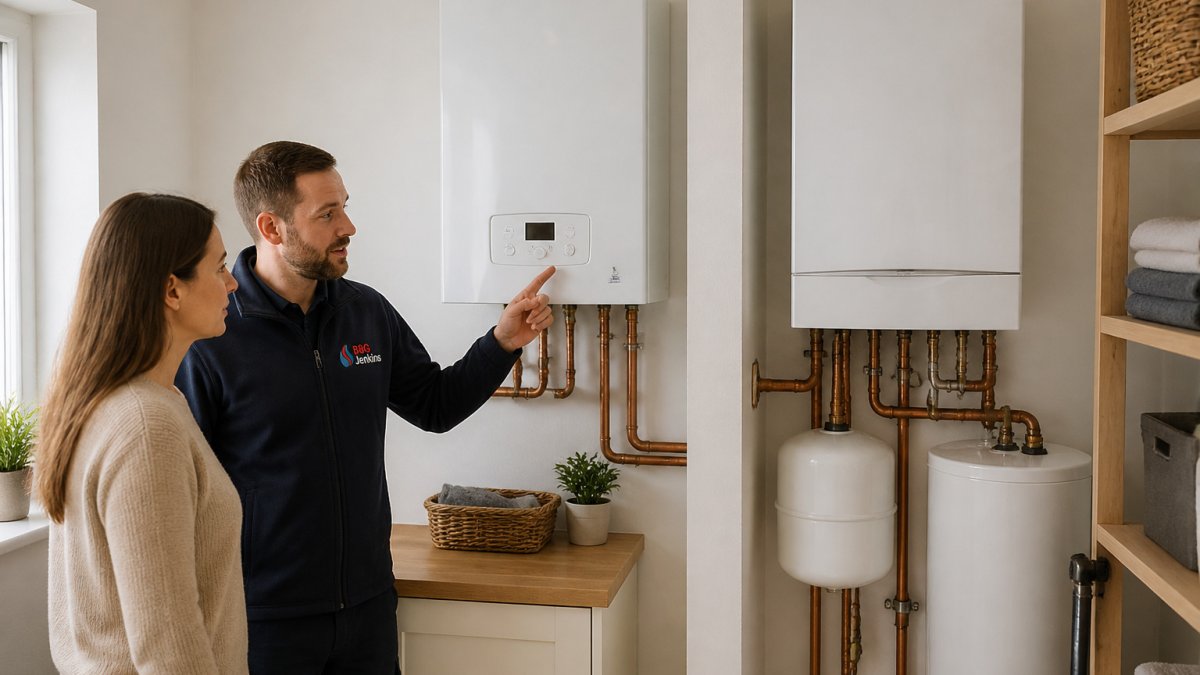
A system boiler works with a hot water cylinder, which stores heated water ready for use. It suits homes with more bathrooms or higher simultaneous demand, because the stored supply can serve several outlets at once. You will usually keep the cylinder and tanks in an airing cupboard or loft space. Maintaining these components is essential for efficiency, though eventually you must decide whether to repair or replace your boiler to ensure your hot water supply remains reliable.
In short: choose a combi if space is tight and demand is modest. Choose a system if you have more than one bathroom and expect regular overlapping use. Our team can assess your existing set-up before recommending either.
Combi Boiler vs Regular Boiler: Key Differences Explained
The regular, or conventional, boiler differs from a combi mainly in how it stores hot water. It uses a feed tank in the loft and a hot water cylinder, much like a system boiler, but the tanks are part of the set-up. This makes it a common choice for older properties that were built with cylinders in place.
Key differences to consider:
- Hot water storage: combis heat water on demand; regular boilers use a cylinder.
- Space needed: combis are compact; regular systems need room for tanks and cylinders.
- Water pressure: combis rely on mains pressure, while regular boilers use gravity-fed tanks.
- Best fit: combis suit smaller homes; regular boilers suit older homes with existing cylinders.
| Boiler type | Hot water supply | Space needed | Typically suits |
|---|---|---|---|
| Combi | On demand | Compact | Smaller homes, flats |
| System | Stored in cylinder | Cylinder and tanks | Homes with several bathrooms |
| Conventional | Stored in cylinder with tanks | Largest footprint | Older properties with existing cylinders |
Pros and cons at a glance
- Combi: Pros: space-saving, no cylinder to store. Cons: may struggle with several simultaneous hot water outlets.
- System: Pros: steady supply for multiple bathrooms. Cons: needs space for a cylinder.
- Conventional: Pros: suits older systems and gravity-fed set-ups. Cons: largest footprint and more components to maintain.
Best Boiler for a 3 Bedroom House and How to Size It
For a three-bedroom house, a system boiler is worth considering, particularly if the home has two bathrooms or a family using hot water at the same time. A combi can still work well if demand is spread out, so the number of bedrooms alone does not settle the question.
Sizing matters as much as the type. An oversized boiler cycles on and off, which wastes energy, while an undersized one struggles to heat the house on cold days. Heat loss, the number of radiators and hot water demand all feed into the right output.
Using a Boiler Size Calculator
A boiler size calculator estimates the output your home needs based on its size, insulation and occupancy. You can learn how to calculate the right boiler size before speaking to an engineer. It gives a useful starting point, but it cannot replace a proper heat-loss assessment, which accounts for your windows, walls and loft insulation. Use a calculator to understand the rough range, then ask a qualified engineer to confirm it on site.
Getting Your Boiler Quote from B&G Jenkins
Choosing a boiler type is easier once you know what your home needs. Pricing depends on the boiler, the installation work and the property. You can see what installation typically involves in Swindon before requesting a quote. For current prices, request a quote through our website. You can check whether a quote can be arranged without a home visit before booking anything. You can request an online boiler quote to see indicative options before we arrange anything in person.
If you are planning a replacement, it helps to understand the wider process first. You can follow the steps to get a quote in Swindon to see what happens from start to finish. When you are ready to proceed, you can request an online boiler quote to start the process.
We recommend speaking with our team about your existing system, your hot water habits and any plans for the property. We can advise whether a combi, system or conventional boiler fits your home, and whether a Worcester boiler suits your needs. You can explore our Worcester boiler options or request an online boiler quote to get started.
Frequently Asked Questions
Which type of boiler is best for a typical home?
For many typical UK homes, a combi boiler works well because it heats water on demand and needs no hot water cylinder. It suits smaller households or homes where hot water is rarely needed in several places at once. Larger homes with multiple bathrooms often suit a system boiler better, as it pairs with a cylinder to supply several outlets at the same time. The right choice depends on your household size, hot water demand and the space available. A B&G Jenkins engineer can assess your property and recommend the most suitable option.
What is the difference between a combi, system and regular boiler?
A combi boiler heats water directly from the mains, so it needs no separate tank. A system boiler works with a hot water cylinder, storing hot water for later use. A regular boiler, sometimes called a conventional boiler, also uses a cylinder, with a separate cold water tank in the loft. Each setup suits different homes, so comparing your current system helps you decide. Our team can explain how each type would fit your property.
Is a combi boiler suitable for a house with more than one bathroom?
A combi boiler can struggle when two or more outlets need hot water at the same time, because it produces hot water on demand and has limited flow. Households with several bathrooms often find a system boiler with a cylinder more reliable. Your existing pipework, water pressure and daily usage all affect the decision. Before choosing, it is worth discussing your household's habits with an engineer. You can start by requesting a boiler quote from B&G Jenkins.
What size boiler do I need for my home?
Boiler size depends on heat loss from your property, the number of radiators and the hot water demand of your household. An oversized boiler can cycle on and off, wasting energy, while an undersized one may not heat your home adequately. A professional heat loss calculation gives the most accurate result. Online boiler size calculators can offer a rough starting point. For a reliable recommendation, contact the B&G Jenkins team for advice tailored to your home.


