
The Homeowner's Guide to Heat Pump Maintenance
Last Updated: October 30, 2026
Quick Summary
Residential heat pump maintenance means keeping airflow clear across the indoor and outdoor units, cleaning or replacing filters regularly, and having the system serviced professionally once a year, ideally in early autumn before the heating season begins. Between services, check airflow monthly and inspect the outdoor unit fortnightly through winter.
- Clean or replace filters at the start of spring and check the condensate drain for blockages.
- Keep a clear airflow gap around the outdoor condenser unit and never box it in.
- Book your annual service in early autumn, before engineers' diaries fill up.
- Check the outdoor unit for ice build-up every couple of weeks through winter.
- Never chip ice off the coils with a tool, as you can puncture the refrigerant circuit.
Table of Contents
- What Residential Heat Pump Maintenance Involves
- Your Seasonal Heat Pump Maintenance Checklist
- How to Handle Heat Pump Filter Cleaning and Airflow
- Maintaining the Outdoor Unit and Managing Defrost Cycles
- How Often Should a Heat Pump Be Serviced?
- Heat Pump Troubleshooting: What to Check Before Calling an Engineer
- The Financial and Warranty Benefits of Regular Maintenance
- When to Call a Professional for Heat Pump Maintenance
- Book Your Heat Pump Service with B&G Jenkins
- Frequently Asked Questions
What Residential Heat Pump Maintenance Involves
A residential heat pump maintenance guide is only useful if it tells you plainly what you are actually maintaining. A heat pump moves heat rather than generating it, and it does that with two units working together: an indoor unit containing the evaporator coils and fan, and an outdoor condenser unit containing the compressor and heat exchanger.
At B&G Jenkins, we know that heat pumps last longest when someone notices a dirty filter or a frosted outdoor unit early. Systems that fail prematurely are usually neglected rather than badly made.
Below, we break down exactly what you can safely do yourself, what belongs with a professional technician, and how to build a service schedule that protects both your energy efficiency and your manufacturer warranty.
Your Seasonal Heat Pump Maintenance Checklist
A heat pump maintenance checklist works best when it is split by season, because an air source heat pump faces completely different demands in July and January. Use this as your annual framework, and keep a simple log of what you checked and when. Consistent documentation of these seasonal adjustments becomes even more critical when managing the specific airflow requirements of a ductless mini split.
| Season | Key Tasks | Frequency |
|---|---|---|
| Spring | Clean or replace filters, clear winter debris from outdoor unit, check thermostat settings, inspect condensate drain | Once, at the start of the season |
| Summer | Check airflow clearance, inspect condensate drain, listen for unusual noise, confirm cooling mode runs without short-cycling | Monthly visual check |
| Autumn | Clear leaves and grit from fan blades and intake grilles, test defrost cycle, book annual service, check outdoor unit is level and secure | Once, before heating season |
| Winter | Check for ice build-up, keep outdoor unit clear of snow, monitor system performance, watch for prolonged defrost cycles | Fortnightly visual check |
Spring and Summer Checks
Spring is about undoing winter. Clear any grit, leaves and debris from around the outdoor unit, wash or replace the filters, and confirm the thermostat is holding the temperature you set rather than drifting. Pay particular attention to the condensate drain: winter grit and algae can block it, and a blocked drain in spring means water where it should not be by summer. Through summer, a monthly walk-around is enough: check that airflow clearance around the condenser unit is unobstructed, look at the condensate drain for blockages, and listen for any change in the fan's note. If the system also provides cooling, run it briefly in cooling mode and confirm it reaches temperature without short-cycling, a system that cycles on and off every few minutes in summer is telling you something is restricted.
Autumn and Winter Checks
Autumn is when you prepare for the workload. Clear the fan blades and intake grilles thoroughly, confirm the defrost cycle is completing properly, and book your annual service before the cold snap fills engineers' diaries. Check that the outdoor unit is sitting level on its base and that the fixings are secure; a unit that has shifted over summer can vibrate and stress pipework. Once winter bites, check the outdoor unit every couple of weeks for ice build-up and keep it clear of snow. Do not chip ice off the coils with a tool, you can puncture the refrigerant circuit. If snow is forecast, clear a path to the unit so you can reach it safely, and never bury it under a cover that restricts airflow.
Why the UK Winter Deserves Its Own Checklist
In practice, the UK's damp, cool winters are harder on a heat pump than a dry cold snap, because moisture in the air accelerates frost formation on the outdoor coil. That makes the defrost cycle the single most important winter function to monitor. A healthy system defrosts periodically, produces steam or water drainage, and returns to heating within a few minutes. A system that ices up and stays iced, or that seems to defrost constantly without warming the house, needs an engineer rather than another round of debris clearing. Keeping the area around the unit clear of leaves, stored items and snow helps prevent call-outs.
How to Handle Heat Pump Filter Cleaning and Airflow
Heat pump filter cleaning is one of the most useful tasks a homeowner can do, and it takes only minutes. Restricted airflow forces the fan and compressor to work harder for the same output, which can reduce energy efficiency.
Here is the process we recommend:
- Switch the system off at the thermostat or isolator before touching anything.
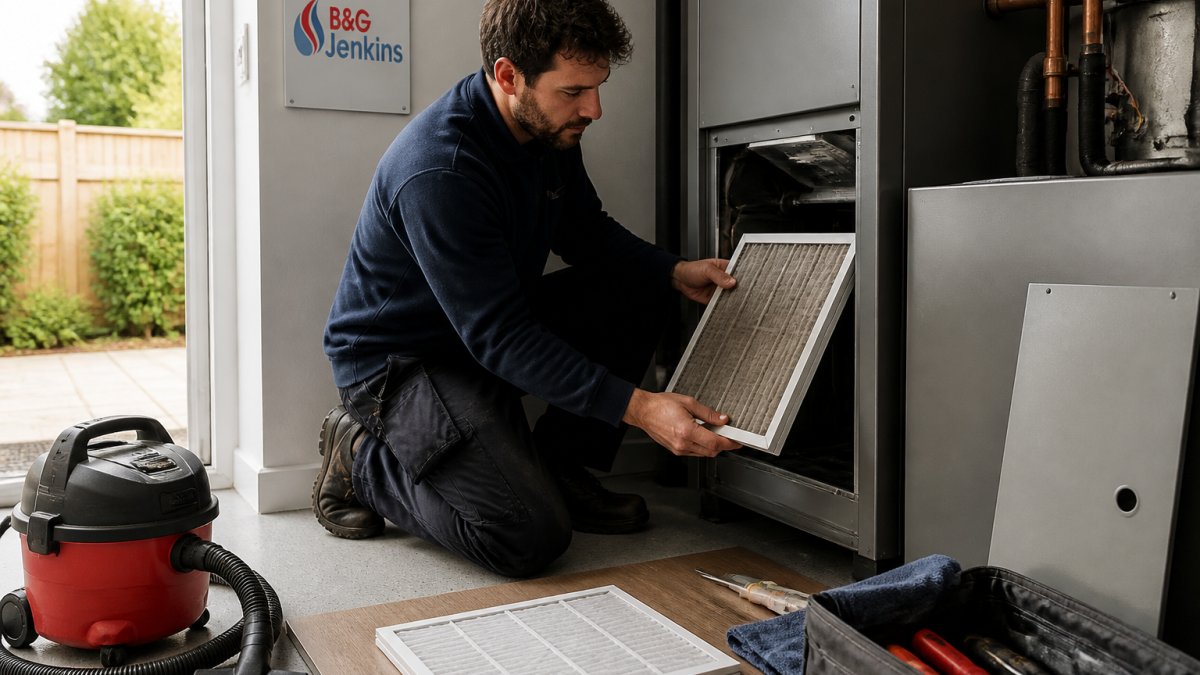
- Open the indoor unit's filter cover and slide out the filter or filters.
- Vacuum the dust from the filter using a soft brush attachment, working along the pleats rather than across them.
- Wash reusable filters in lukewarm water if the manufacturer guidelines allow it, then let them dry completely.
- Check the intake grilles for dust build-up and wipe them down.
- Refit the filters only when fully dry, close the cover, and restore power.
While you are in there, look at the evaporator coils behind the filter. A light dusting is normal; a matted layer means the filter has been overdue. For more on keeping indoor units clean, our residential air conditioning maintenance tips cover the same airflow principles in more detail.
Maintaining the Outdoor Unit and Managing Defrost Cycles
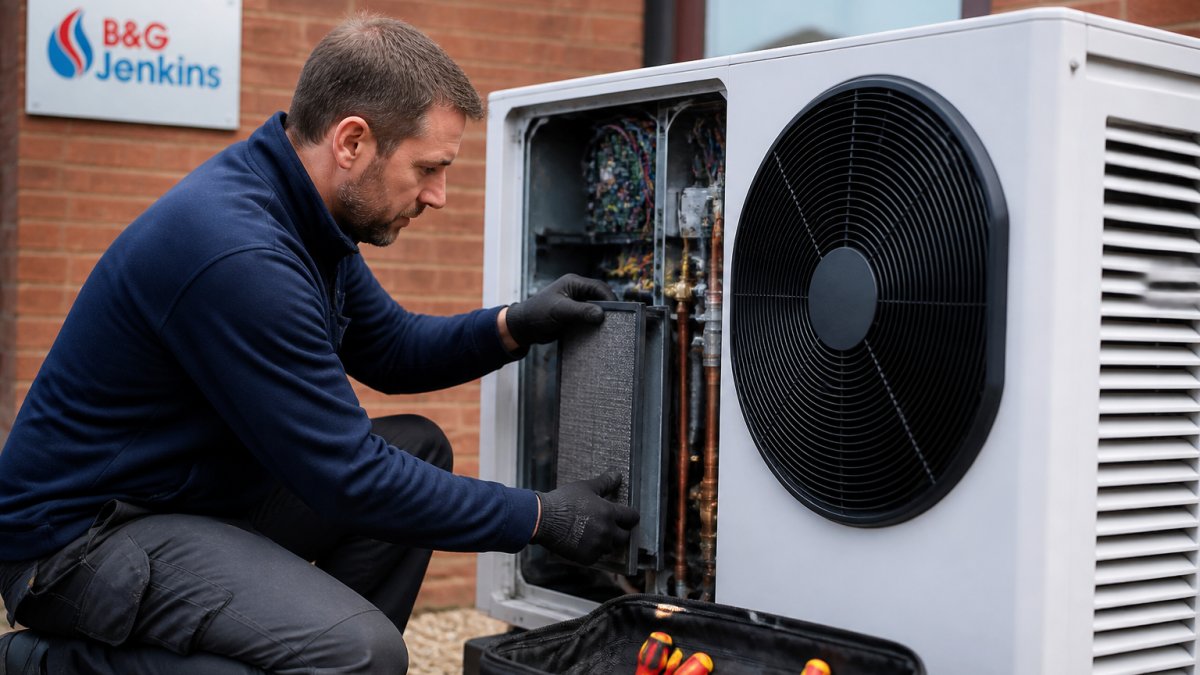
The outdoor condenser unit does the hardest work and gets the least attention. Keep a clear airflow clearance around it, typically a good gap on all sides so air can pass freely through the coils, and never box it in with bins, planters or stored garden furniture.
Debris removal matters more than most people realise. Leaves trapped against the coil hold moisture, and moisture plus cold equals ice. Check the fan blades turn freely and that the intake grilles are clear.
The defrost cycle is the part that confuses homeowners most. In cold weather the outdoor coil naturally frosts up, and the system periodically reverses to melt that frost. Steam or water draining away during a defrost is normal. Ice that persists for hours, or a unit that never seems to complete a defrost, is not.
How Often Should a Heat Pump Be Serviced?
A heat pump should be serviced professionally once a year, ideally in early autumn before the heating season begins. Check your manufacturer's guidance on what is needed to keep the warranty valid.
Between services, your own checks should be more frequent. We suggest a monthly visual inspection of airflow and a fortnightly glance at the outdoor unit through winter. If your system runs hard all year, or you rely on it as your only heat source, an extra mid-year check is sensible.
A heat pump is generally serviced once annually, in line with common manufacturer guidance.
Heat Pump Troubleshooting: What to Check Before Calling an Engineer
Heat pump troubleshooting starts with the basics, and a surprising number of call-outs end with a filter that has not been cleaned or a thermostat that has drifted off its schedule. Before you pick up the phone, work through this:
- No heat or cooling: check the thermostat is set correctly and the system has power at the isolator.
- Weak airflow: clean the filters and confirm no furniture is blocking the indoor intake grilles.
- Frequent defrosting or ice build-up: clear debris from the outdoor unit and check for anything obstructing airflow.
- Unusual noise: a light hum is normal; grinding, rattling or a persistent clicking is not.
- Water around the indoor unit: check the condensate drain for a blockage.
- Error codes: note the exact code before calling. Many modern systems display fault codes that can help an engineer identify where to look.
How to Read Heat Pump Error Codes
Error codes are the most useful diagnostic tool a homeowner has, and most guides skip them entirely. A heat pump controller displays a short code, often a letter and a number, or a two-digit number, when it detects a fault. The code is not a verdict; it is a pointer. The same code can mean different things on different manufacturers' equipment, so the first step is always to check the fault-code table in your system's manual or on the label inside the indoor unit cover.
A practical approach:
- Write the code down exactly, along with what the system was doing when it appeared, heating, defrosting, starting up, or after a power cut.
- Check the manual's fault-code table for the meaning and any user-resettable action.
- Try one reset only if the manual says the fault is resettable. Switch off at the isolator, wait a few minutes, restore power, and see whether the code clears.
- If the code returns, stop resetting. A code that comes back after a reset is telling you the fault is real and persistent.
Codes That Usually Mean "Call an Engineer"
While codes vary by manufacturer, certain categories almost always warrant a professional visit rather than a DIY fix: codes relating to refrigerant pressure or flow, compressor protection, high or low pressure switches, inverter or control-board faults, and repeated defrost failures. These point to sealed-system or electrical issues that are not homeowner tasks. By contrast, codes relating to filter blockage, airflow restriction, condensate drain faults or thermostat communication are often worth checking yourself first, clean the filter, clear the drain, confirm the thermostat is paired and powered, then reset once.
What most guides miss is that error codes are diagnostic gold. Write the code down, along with what the system was doing when it appeared. If you want more detail on fault-finding, our heating and boiler advice covers the wider system, and our team is happy to talk through a code.
The Financial and Warranty Benefits of Regular Maintenance
Regular maintenance helps protect both running costs and warranty cover. A heat pump with clean filters and clear coils can move heat more easily, which may reduce the electricity it draws for the same warmth.
The warranty side is where neglect really bites. Most manufacturer guidelines require servicing at the stated intervals, and a system that has been run for years with blocked filters and a frosted outdoor unit gives a manufacturer grounds to question a claim. Keep your service records. A dated invoice from a qualified technician is worth more than any verbal assurance when a compressor fails.
If you are weighing up whether to maintain an ageing system or replace it, our guide to choosing energy efficient heating sets out the comparison honestly.
When to Call a Professional for Heat Pump Maintenance
Call a professional for anything involving refrigerant, the compressor, the electrical supply or the heat exchanger. Those are not homeowner tasks, and getting them wrong is dangerous as well as expensive. Beyond that, call an engineer when:
- An error code persists after you have cleaned the filters and reset the system
- The outdoor unit stays iced up for hours or repeatedly fails to defrost
- You can hear grinding or rattling from the compressor or fan
- The system runs constantly without reaching the set temperature
- Your annual service is due, or you cannot find a record of the last one
A professional technician can check refrigerant pressures, electrical connections, thermostat calibration and the defrost cycle during a visit, and flag anything that appears to be drifting.
Book Your Heat Pump Service with B&G Jenkins
The real challenge with heat pump ownership is not understanding what to do, it is keeping the schedule when life gets busy. A filter cleaned in spring, a service booked in autumn, a note made of any error code, those small habits are what separate a system that runs for fifteen years from one that limps to eight.
B&G Jenkins has been established since 1967, and we can help take the professional side of that schedule off your hands. Our team offers heat pump installation, and we provide free, no-obligation estimates. Our online quote tool gives indicative pricing in under two minutes if you are considering an upgrade. Get started with B&G Jenkins and keep your heat pump running efficiently for years to come.
Frequently Asked Questions
What maintenance does a residential heat pump need?
A residential heat pump needs a mix of DIY and professional care. Homeowners should clean or replace air filters every few months, keep the outdoor unit clear of debris, and check that vents are unobstructed. A professional annual service is also essential. This includes checking refrigerant levels, testing electrical components, inspecting the compressor, and verifying the defrost cycle. Following a proper heat pump maintenance checklist ensures the system runs efficiently and lasts longer.
How often should a heat pump be serviced?
You should have your heat pump serviced by a professional once a year. The best time is usually in early autumn, before the heating season begins. This annual service is crucial for maintaining energy efficiency, catching small issues before they become major breakdowns, and keeping your manufacturer's warranty valid. Between professional visits, you should perform simple homeowner maintenance tasks, like cleaning filters, every one to three months.
Can I maintain an air source heat pump myself?
Yes, you can and should perform some basic maintenance yourself. Safe DIY tasks include cleaning or replacing air filters, gently rinsing the outdoor unit with a hose to remove dirt, clearing leaves and debris from around the unit, and checking that the condensate drain is not blocked. However, you should never attempt to open the refrigerant circuit or access electrical components. Tasks involving refrigerant, electrical checks, or complex diagnostics must be left to a qualified professional.
What should I check on an outdoor heat pump unit?
For the outdoor unit, start by ensuring there is adequate airflow clearance around it. Remove any leaves, branches, or other debris from the top and sides. You can gently wash the fins with a garden hose to remove dirt, but avoid using a pressure washer as it can damage them. Check that the fan blades are not obstructed and are free of debris. Also, inspect the base for any signs of rust or damage and ensure the unit is standing level.
How do I know if my heat pump needs servicing?
Several signs indicate your heat pump needs attention. Look out for reduced heating or cooling performance, unusual noises like grinding or rattling, or higher-than-normal energy bills. Frequent cycling on and off, or the system's inability to reach the set temperature, are also red flags. If you see ice building up on the outdoor unit or notice water leaks, it's time to call a professional for heat pump troubleshooting and a service.
Does a heat pump need an annual service?
Yes, an annual service is highly recommended and often required to keep your warranty valid. A yearly check-up by a qualified technician helps maintain the system's energy efficiency, preventing it from working harder and costing more to run. It also allows for early detection of potential issues, which can prevent costly breakdowns and extend the lifespan of your heat pump. This preventive maintenance is a key part of being a responsible homeowner.


