
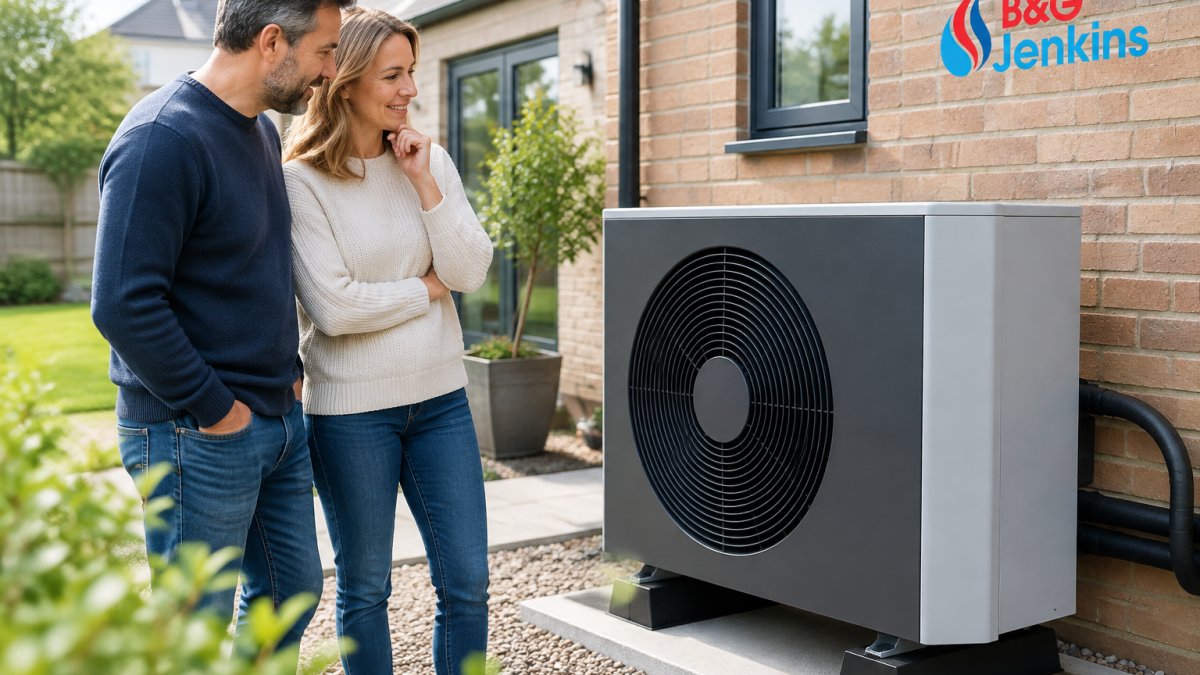
Are Heat Pumps Worth It in 2026? A Homeowner's Guide
Last Updated: November 7, 2026
Quick Summary
For most homes with reasonable insulation and a well-designed system, heat pumps are worth it in 2026. The catch is that worth it depends on your property, your tariff and how the system is specified, so a proper heat-loss calculation and sensible electricity tariff are essential.
- A SCOP of 3 means three units of heat for every unit of electricity across the season.
- A modern condensing gas boiler runs at around 90% efficiency, while a heat pump at SCOP 3 delivers the equivalent of 300%.
- A ratio of about 3.5 to 4 is the rough break-even zone on a standard tariff.
- Ask your installer for the expected SCOP, annual heat demand and assumed electricity unit rate before comparing quotes.
- Older homes usually need fabric-first work such as loft insulation, draught-proofing and larger radiators before a heat pump goes in.
Table of Contents
- Are Heat Pumps Worth It in 2026? The Short Answer
- How a Heat Pump Works and Why Efficiency Matters
- Air Source vs Ground Source: Which Suits Your Property?
- Heat Pump Installation Requirements for a Typical Home
- Heat Pump vs Gas Boiler: Running Costs Compared
- What Air Source Heat Pump Running Costs Look Like
- Grants, Upfront Costs and the Heat Pump Payback Period
- Are Heat Pumps Suitable for Older Homes?
- Planning, Noise and Neighbour Considerations
- Request a Heat Pump Assessment for Your Home
- Frequently Asked Questions
Are Heat Pumps Worth It in 2026? The Short Answer
For most homes with reasonable insulation and a well-designed system, yes: heat pumps are worth it in 2026. The catch is that "worth it" depends on your property, your tariff and how the system is specified. The homes where heat pumps disappoint are almost always the ones where the design was rushed, not the ones where the technology failed.
A heat pump is a heating system that moves heat from outside air or ground into your home rather than generating it by burning fuel. That single difference explains most of the running-cost and carbon arguments that follow.
So are heat pumps worth it in 2026? Yes, provided three things hold: the heat-loss calculation is done properly, the radiators or underfloor loops suit a low flow temperature, and your electricity tariff is sensible. Miss any of those and the sums stop working. Below, we walk through how the systems work, what installation involves, the running-cost comparison with gas, and the practical checks we would make before recommending one.
How a Heat Pump Works and Why Efficiency Matters
A heat pump works like a fridge running in reverse: it extracts low-grade heat from the air or ground, raises its temperature with a compressor, and releases it into your heating and hot water circuits. Because it moves existing heat rather than creating it, it can deliver more heat energy than the electricity it consumes.
That ratio is measured as SCOP, the seasonal coefficient of performance. A SCOP of 3 means three units of heat for every unit of electricity across the season. SCOP is the number that decides your bills, and it falls when flow temperatures rise. A system running at 35°C to 45°C will comfortably beat one pushed to 55°C or more. This is why radiator sizing and insulation matter more than the badge on the outdoor unit.
Efficiency also drifts if the system is neglected. Filters clog, refrigerant levels slip, and controls fall out of step with how you actually live. Regular servicing keeps measured performance close to the design figure, which is exactly what our guide to heat pump maintenance covers.
Air Source vs Ground Source: Which Suits Your Property?
Air source heat pumps (ASHP) suit the vast majority of homes. They sit outside, need clear space around the unit, and connect to your existing radiator or underfloor circuit. Ground source heat pumps (GSHP) use buried loops and hold a steadier efficiency through winter, but they need land or a borehole and far more groundwork. Whichever system suits your plot, comparing energy efficient heat pumps by seasonal performance can help you judge how well each will cope with your home’s heating needs.
| Feature | Air source (ASHP) | Ground source (GSHP) |
|---|---|---|
| Space needed | A clear external wall or garden position | Garden loops or boreholes |
| Efficiency in cold snaps | Drops slightly | Stays steadier |
| Installation disruption | Low to moderate | High, involves excavation |
| Best for | Most suburban homes | Larger plots with land |
Heat Pump Installation Requirements for a Typical Home
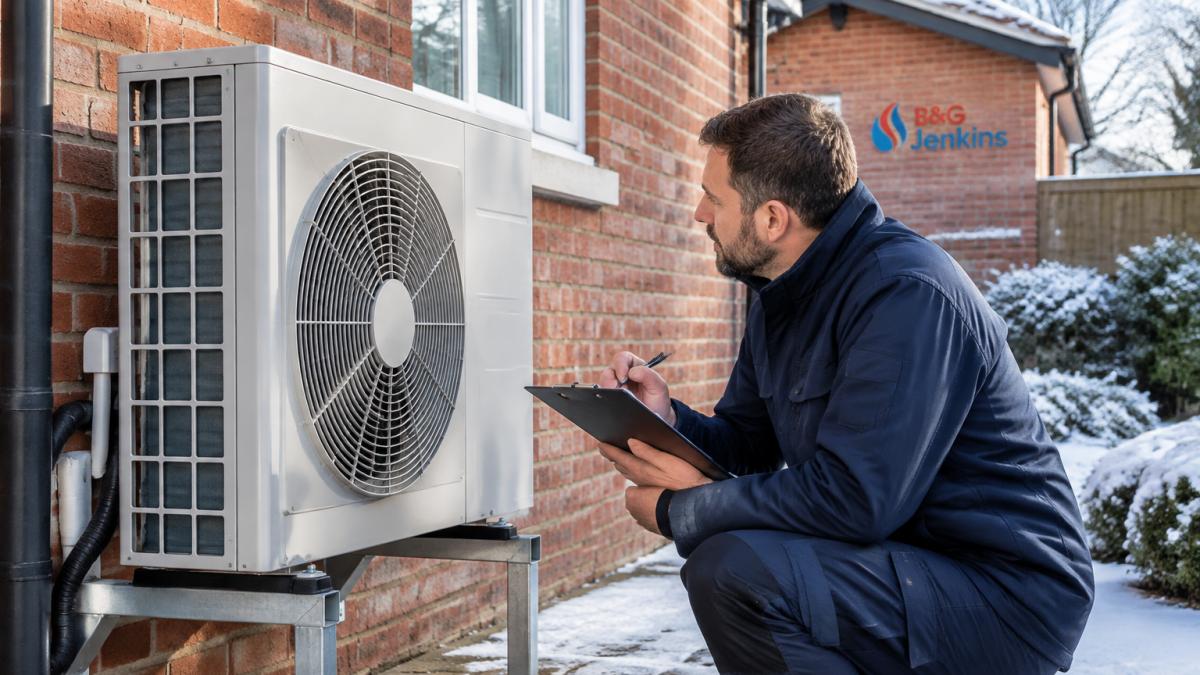
Most homes need four things before an air source heat pump goes in: a heat-loss calculation, a suitable outdoor position, adequate radiator output for low flow temperatures, and a hot water cylinder. A well-insulated loft and cavity walls help enormously, but they are not always a precondition.
The woman is British.
The heat-loss calculation is the step that gets skipped, and it is the one that matters most. Room-by-room sizing tells us the heat demand of each space and the flow temperature the system must run at. From there we size radiators, not guess them. A common mistake is reusing undersized radiators from an old boiler system and then blaming the heat pump for poor performance.
Heat Pump vs Gas Boiler: Running Costs Compared
Running costs come down to one ratio: the price of electricity against the price of gas. Electricity costs more per unit than gas, so the running-cost comparison depends heavily on the tariff. On a time-of-use or heat pump tariff, that ratio improves considerably.
A modern condensing gas boiler runs at around 90% efficiency. An air source heat pump running at a SCOP of 3 delivers the equivalent of 300%. Whether that translates into lower bills depends on your tariff, your home's heat demand and how the system is controlled.
Most guides stop there. The useful version is to put your own numbers through the same sum, because the answer flips on two variables you control: your heat demand and your unit rates.
The calculation, step by step. Take your annual gas use in kilowatt-hours from a recent bill. Multiply by the boiler's efficiency (about 0.9 for a condensing boiler) to get the useful heat your home actually needs. Divide that heat demand by the SCOP you expect from the heat pump to get annual electricity consumption. Multiply by your electricity unit rate, then add the standing charge. Do the same for gas, and compare the two totals.
A worked example. A home using 12,000 kWh of gas a year at 90% efficiency needs about 10,800 kWh of useful heat. At a SCOP of 3, that is 3,600 kWh of electricity. Whether that translates into lower running costs depends on the electricity tariff and standing charges. Time-of-use tariffs that shift running to cheaper periods can narrow the gap. We would not quote a single figure for your home without your actual bills, because the spread between homes is wider than the spread between technologies.
Why the ratio moves. Three things change the electricity-to-gas price ratio. First, standing charges: a heat pump household often keeps a gas connection for cooking or a hob, so you may pay two standing charges unless you go fully electric. Second, time-of-use tariffs: off-peak windows suit a heat pump with a thermal store or a hot water cylinder that can be heated when electricity is cheapest. Third, the relative unit prices themselves, which shift with wholesale markets and policy. A ratio of about 3.5 to 4 is the rough break-even zone on a standard tariff; below that, the heat pump usually wins on running cost, above it, gas often does.
Where the boiler still wins. A poorly insulated home with high heat demand, small radiators forcing a high flow temperature, and a standard electricity tariff is the combination where a heat pump struggles to beat gas on running cost. That is not a failure of the technology; it is a specification and tariff problem, and it is exactly what a heat-loss survey and a tariff review are for.
If you are weighing up whether to stay on gas, our guide to choosing the right boiler type explains what suits different homes. For the wider picture on cutting bills, see our advice on choosing energy efficient heating.
What Air Source Heat Pump Running Costs Look Like
Air source heat pump running costs vary too widely between homes for a single figure to be honest. The variables are your home's heat demand, your electricity unit rate, your SCOP, and how warm you keep the house.
Rather than quote a number, we would work it through with you: take your annual gas usage in kilowatt-hours, estimate the heat demand it represents, divide by your expected SCOP to get electricity consumption, then apply your tariff. A home using 12,000 kWh of gas a year with a SCOP of 3 needs roughly 4,000 kWh of electricity for the same heat. Whether that saves money depends entirely on the two unit rates.
Grants, Upfront Costs and the Heat Pump Payback Period
A government grant route for homeowners is the Boiler Upgrade Scheme (Apply for the Boiler Upgrade Scheme: Overview). Eligibility rules change over time, so check current guidance before budgeting. We will not quote the current amount here because it is revised periodically; check the Boiler Upgrade Scheme guidance for the live figure and eligibility criteria before you budget.
What the grant does and does not cover. The grant is a fixed contribution towards the cost of the heat pump and its installation. It does not cover everything a typical installation needs. Radiator upgrades, pipework changes, a hot water cylinder where one is missing, electrical supply upgrades and any fabric work such as loft insulation are usually outside the grant and fall to the homeowner. That is why the headline grant figure and the real cost of a finished system are different numbers, and why a quote should itemise what is included.
Who typically qualifies. The scheme is aimed at replacing fossil-fuel heating in domestic properties. Eligibility depends on the current scheme criteria, so the live guidance is the only reliable source. Homes off the gas grid and properties with certain restrictions can face different rules, so the live guidance is the only reliable source. We would always check your property against the current criteria before you commit to a design.
What drives the upfront cost. The installation cost is not a single number because it depends on the heat-loss calculation, the number and size of radiators to be replaced, whether a cylinder is needed, the distance from the outdoor unit to the plant room, and any electrical work. A well-insulated home with generous existing radiators needs less work than a solid-walled property with small radiators and a long pipe run. Ask for a room-by-room heat-loss calculation with the quote; without it, the price is a guess.
How payback actually works. The heat pump payback period is the time it takes for annual bill savings to recover the extra upfront cost over a boiler replacement. The sum is: extra upfront cost divided by annual running-cost saving. Two things move it. A larger saving shortens payback; a smaller extra cost shortens it too. On a well-matched system with a good tariff, payback can be reasonable; on a poorly insulated home with a standard tariff, it stretches out. Because the grant reduces the upfront figure, it shortens payback directly, which is why checking eligibility is worth the effort before you compare quotes.
A practical way to test it. Ask your installer for the expected SCOP, the annual heat demand from the heat-loss calculation, and the assumed electricity unit rate. Put those into the running-cost sum in the previous section alongside your current gas bill. If the annual saving is modest, the payback will be long, and a high-efficiency boiler may be the smarter spend for now. If the saving is clear and the grant applies, the case is stronger. We would rather show you that sum than sell you a system that does not stack up.
If you want a sense of what a like-for-like boiler installation involves, our boiler installation cost guide sets out the factors.
Are Heat Pumps Suitable for Older Homes?
Older homes can absolutely take a heat pump, but they usually need more preparation. Victorian and pre-war properties often have solid walls, draughty floors and small radiators, all of which push up heat demand and flow temperature.
The workable approach is fabric-first: loft insulation, draught-proofing, and larger radiators or a hybrid setup where it makes sense. A heat-loss survey will tell you where the losses are. What we would not do is fit a heat pump into a home without addressing obvious fabric issues and then declare the technology unsuitable. It rarely is; the specification usually is.
Planning, Noise and Neighbour Considerations
Planning rules can apply to heat pump installations, and there are limits on unit size, position and noise (Planning Permission: Air source heat pump - Heat pumps). Compressor noise is low but audible, so siting matters: avoid boundaries and bedrooms where possible.
Check with your local planning authority before committing to an installation. Good siting solves most noise concerns before they start.
Request a Heat Pump Assessment for Your Home
The right way to answer "are heat pumps worth it" for your house is a proper assessment, not a calculator on a website. We can look at your heat-loss figures, your existing radiators, your hot water demand and your tariff, then advise whether a heat pump or a high-efficiency boiler suits your home.
You can browse our heating and boiler advice for more detail, or get in touch to arrange an assessment.
The decision is rarely about whether heat pumps work; it is about whether your home and tariff are set up to let one work well. B&G Jenkins can run the numbers with you, advise on system design and talk you through the options. Get started with B&G Jenkins and find out what suits your property.
Frequently Asked Questions
Are heat pumps worth it in 2026?
For many households, yes, provided the home is reasonably insulated and the system is designed correctly. The case rests on three things: how well the heat pump performs (its SCOP), the gap between electricity and gas prices, and any grant support available at the time. Homes with poor insulation or undersized radiators may need extra work first, which affects the sums. A proper heat-loss calculation is the only reliable way to know for your property.
Are heat pumps cheaper to run than gas boilers?
Not automatically. A heat pump typically delivers three to four units of heat per unit of electricity, but electricity costs more per kWh than gas. Running costs depend on your tariff and the system's seasonal coefficient of performance (SCOP). A well-designed system with a low flow temperature can be competitive, while a poorly matched one may cost more. Compare your own tariff figures rather than relying on averages.
Do heat pumps work well in older homes?
They can, but older homes usually need preparation. That means addressing insulation, draught-proofing and radiator sizing so the system can run at a lower flow temperature. A Victorian terrace can work well with a careful room-by-room heat-loss calculation and, where needed, larger radiators or underfloor heating. The key is proper system design rather than assuming the building type rules it out.
How long does a heat pump payback period usually take?
There is no fixed figure. Payback depends on the upfront installation cost after any grant, the annual savings against your current heating, and future energy prices. Homes replacing expensive fuels such as oil or LPG often see faster payback than those on mains gas. Ask your installer for a worked comparison using your own usage and tariff, and treat any single national average with caution.
Can a heat pump replace a gas boiler entirely?
Yes, a correctly sized heat pump can meet all your heating and hot water needs. It usually works best with low-temperature heating such as larger radiators or underfloor heating, and a hot water cylinder is normally required. The installer should carry out a full heat-loss calculation and room-by-room sizing before recommending a unit, rather than matching the output of your old boiler.
What are the main disadvantages of heat pumps?
Higher upfront cost than a like-for-like boiler swap, the need for a hot water cylinder, and possible radiator upgrades are the common drawbacks. Outdoor unit noise and siting need thought, and performance depends on good insulation and correct commissioning. Some older properties need more preparation work. These are design considerations rather than reasons a heat pump cannot work.


