
How to Reduce Boiler Energy Bills with Smarter Settings
Last Updated: 15 November 2026
Quick Summary
You can reduce boiler energy bills by lowering the heating flow temperature on your combi boiler, since many leave the factory set higher than a home needs. In one documented case, dropping the flow temperature from 80°C to 60°C cut gas use by around 9%. Adjust it in small steps and keep the hot water setting higher.
- Set the thermostat to the lowest temperature you are comfortable at rather than leaving it high.
- Balance radiators so you can run a lower flow temperature and still feel warm.
- Most sealed systems should sit between 1 and 1.5 bar when cold, though ranges vary by model.
- Bleed radiators starting on the lowest floor and working upwards, then check boiler pressure.
- An annual service catches small faults before they become expensive breakdowns.
Table of Contents
- Start With Your Boiler Flow Temperature Setting
- Get Your Heating Timer and Thermostat Settings Right
- How to Balance Radiators for Even, Efficient Heat
- Check Boiler Pressure and Bleed Radiators
- Boiler Servicing and Energy Efficiency: What a Service Actually Does
- Insulate Pipes and Tackle Heat Loss Around the Home
- Diagnose Whether Your Boiler Is Running Inefficiently
- Request a Boiler Quote or Arrange a Service Visit
- Frequently Asked Questions
Start With Your Boiler Flow Temperature Setting
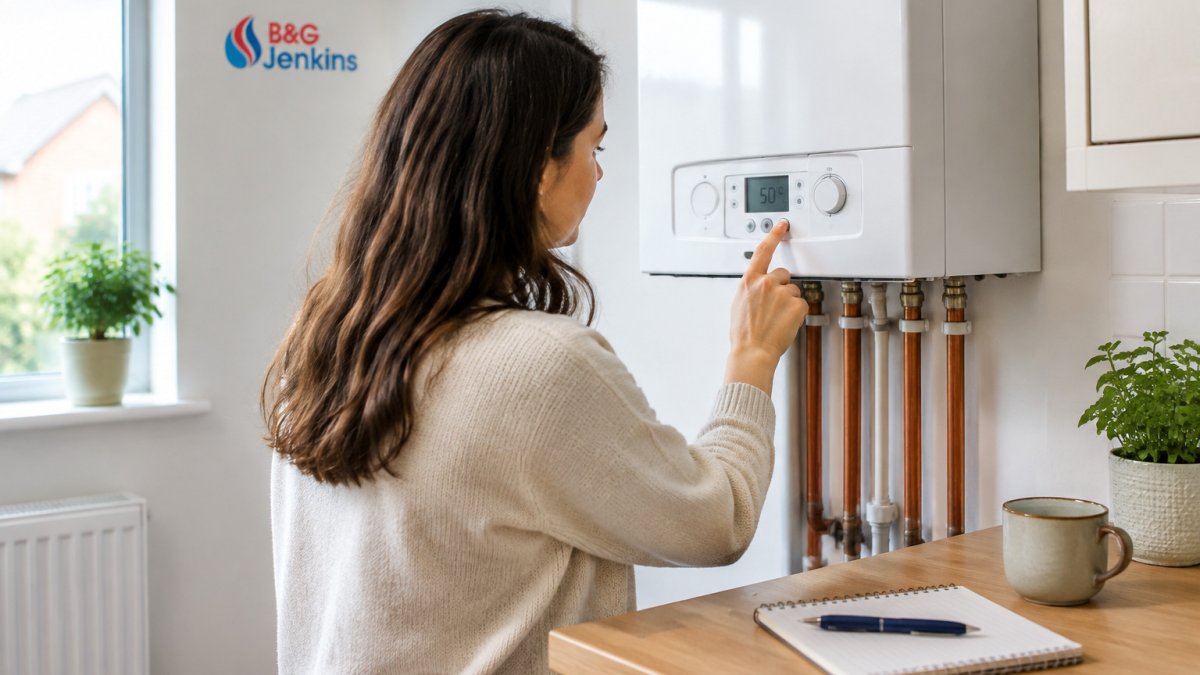
Most homes could cut their boiler energy bills with one small change: turning down the flow temperature. Flow temperature is the temperature of the water your boiler sends around the radiators. Many combi boilers leave the factory set higher than a home actually needs.
A boiler can be running fine yet still work harder than it needs to.
The Money Saving Boiler Challenge from Nesta tested this exact idea. Households that reduced their flow temperature found it one of the easiest and most effective steps to take.
Adjusting the setting requires no new parts.
How to Adjust Flow Temperature on a Combi Boiler
The exact steps depend on your boiler model, so check your manual first. The general process looks like this:
- Find the flow temperature setting on the boiler display or front panel.
- Note the current setting before you change anything.
- Lower it in small steps, a few degrees at a time.
- Run the heating for a day and check the rooms feel warm enough.
- Repeat until you find the lowest setting that keeps you comfortable.
Combi boilers usually run heating and hot water separately. The hot water setting should stay higher for a strong shower. Lower the heating flow temperature, not the hot water one.
What to Do If Your Radiators Stop Heating Properly
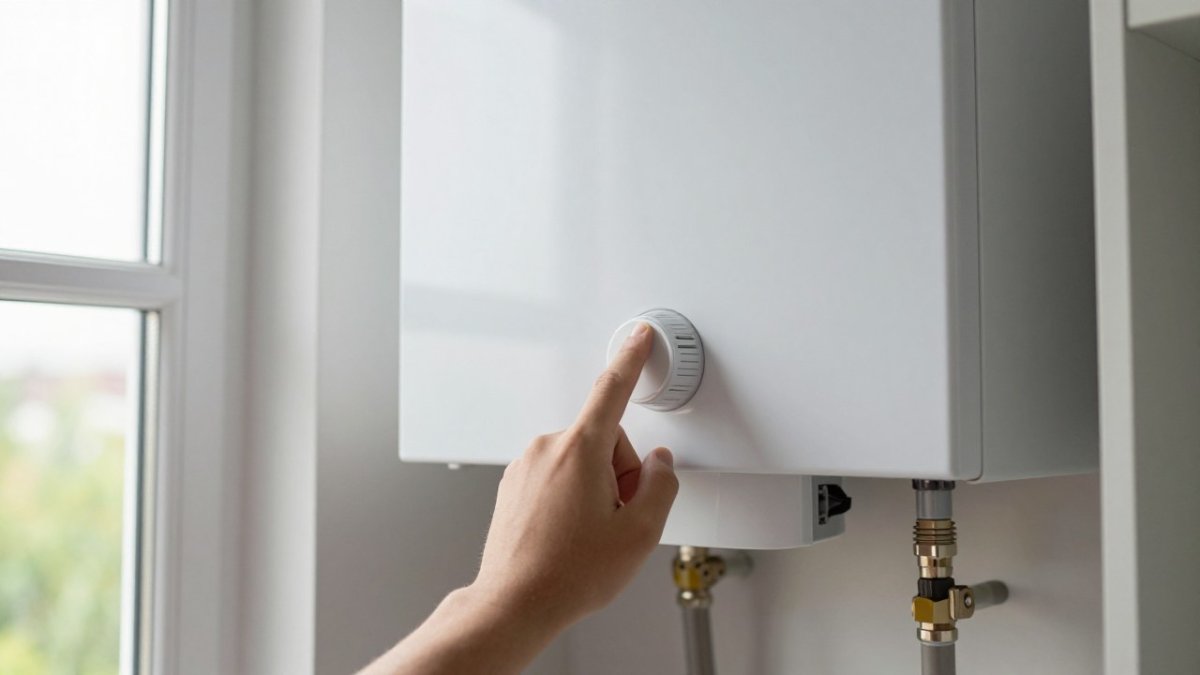
Turning the flow temperature down can leave radiators lukewarm if the setting is too low or the system has other issues. If rooms stop warming up, raise the flow temperature a few degrees and test again.
Cold radiators at the bottom or top often point to trapped air or sludge, not the setting. If the problem continues, our guide on what to do when your heating fails walks through the likely causes and when to call an engineer.
Get Your Heating Timer and Thermostat Settings Right
Getting your heating timer and thermostat settings right is the next step, and it costs nothing. The Behavioural Insights Team lists turning down the thermostat and adjusting boiler settings among the practical ways to cut energy bills that actually work.
A small drop in room temperature can make a difference over a winter. Set the thermostat to the lowest temperature you are comfortable at, rather than leaving it high and opening windows.
Setting a Schedule That Matches Your Routine
A heating schedule should match when the house is actually occupied. Try this approach:
- Set the heating to come on about 30 minutes before you wake.
- Switch it off when everyone leaves for work or school.
- Bring it back on before people return home.
- Lower it overnight, when you are under the duvet.
Use the programmer rather than nudging the thermostat up and down all day. A steady schedule is generally more efficient than constant adjustment. If you have thermostatic radiator valves, set them lower in rooms you rarely use.
How to Balance Radiators for Even, Efficient Heat
Balancing radiators means adjusting the valves so heat reaches every radiator evenly. When one radiator runs hot and another stays cold, the boiler is heating water that never warms the far rooms properly.
To balance a system, you adjust the lockshield valve on each radiator, usually with the heating running and the system cool enough to touch. It is fiddly work, and a qualified engineer can do it during a service visit.
A balanced system lets you run a lower flow temperature and still feel warm. That is where the real saving sits.
Check Boiler Pressure and Bleed Radiators
Checking boiler pressure and bleeding radiators are two quick jobs that help keep your system running well. Doing them properly can also help you spot early warning signs of a fault.
Understanding Boiler Pressure
Boiler pressure is the reading on the gauge, usually a dial or digital display on the front of the boiler. It shows the pressure of the water inside the sealed heating system, not the pressure of the gas supply.
Pressure behaves differently depending on whether the system is hot or cold. When the heating runs, water expands and the pressure rises, often by around 0.5 bar. That is normal. What matters is the cold reading.
- Pressure too low: the boiler may lock out and refuse to fire, or you may hear gurgling in the radiators. A single top-up is usually fine; repeated top-ups point to a leak or trapped air.
- Pressure too high: often caused by overfilling. If it climbs towards the upper end of the gauge or the safety discharge pipe outside starts dripping, stop and call an engineer.
How to Top Up Boiler Pressure Safely
Most sealed systems have a filling loop, a braided hose with two valves, usually under the boiler. The general process is:
- Let the system cool so the gauge reads cold pressure.
- Open one valve, then the other slowly, and watch the gauge.
- Stop at the lower end of the range in your manual, usually around 1 bar cold.
- Close both valves firmly and check for drips.
- Run the heating and confirm the pressure rises and settles without climbing too high.
Watch out: if the pressure drops again within days of topping up, do not keep refilling it, as repeated loss can point to a leak, a faulty pressure relief valve or trapped air that needs a qualified heating engineer.
Bleeding Radiators Correctly
Bleeding releases trapped air so hot water fills the radiator fully.
To bleed a radiator:
- Turn the heating off and let the radiators cool so you are not scalded.
- Place a cloth and a small container under the bleed valve at the top corner.
- Open the valve slowly with a radiator key, a quarter to half a turn is enough.
- Listen for the hiss of escaping air. When water trickles out steadily, close the valve.
- Work through the radiators, starting with the lowest floor and working upwards.
- Check the boiler pressure afterwards and top up if bleeding has dropped it below the cold range.
Bleeding lowers system pressure, so always check the gauge afterwards. If you have to bleed the same radiator repeatedly, air is getting into the system somewhere, and that is a job for a professional.
If your pressure keeps falling or your radiators will not heat evenly after bleeding, our guide on what to do when your heating fails walks through the likely causes and when to call an engineer.
Here are the key pressure and bleeding figures to keep in mind.
| Item | Value | Note |
|---|---|---|
| Cold pressure range for most sealed systems | 1 to 1.5 bar | Always check your manual; range varies by make and model |
| Pressure rise when heating runs | Around 0.5 bar | Normal, as water expands |
| Top-up target | Around 1 bar cold | Stop at the lower end of your manual's range |
| Bleed valve turn | A quarter to half a turn | Enough to release trapped air |
| Bleeding order | Lowest floor first, working upwards | Check boiler pressure afterwards |
| Warning sign | Pressure drops again within days | Do not keep refilling; call an engineer |
Boiler Servicing and Energy Efficiency: What a Service Actually Does
A boiler service keeps the boiler running safely and efficiently, but the efficiency link is often misunderstood. A service cannot restore a boiler to its original efficiency, and it will not turn an older non-condensing model into a modern one. What it does is remove the gradual losses that build up between services and catch faults before they cost you more. When those gradual losses point to an ageing boiler, energy efficient boiler installation may be the next step towards reducing the energy needed to heat your home.
What an Engineer Actually Checks
A proper service is more than a quick look. A qualified heating engineer will typically:
- Test the gas pressure and gas rate at the meter to confirm the boiler is burning the right amount of fuel.
- Inspect the flame picture, a healthy flame on a gas boiler should be crisp and blue, not yellow or lifting.
- Check the flue and combustion readings with a flue gas analyser to confirm the boiler is burning cleanly and safely.
- Clean the heat exchanger, burner and condensate trap, since soot, debris and blocked condensate all reduce efficiency.
- Check the expansion vessel charge, pressure relief valve and system pressure.
- Test safety devices, seals and case seals, and confirm ventilation is adequate.
- Look for leaks, corrosion and signs of wear on components.
A service should leave you with a service record. Keep it as evidence that the boiler has been maintained, which can matter for manufacturer warranties and landlords' gas safety obligations.
How Efficiency Degrades Between Services
A boiler does not lose efficiency in one dramatic step. It drifts. A slightly dirty heat exchanger transfers heat less effectively, so more heat goes up the flue. A mis-set gas pressure means the boiler burns more fuel than it needs to. A blocked condensate trap can cause the boiler to lock out or short-cycle.
That is why an annual service is the sensible interval. It is frequent enough to catch drift before it becomes expensive, and it matches the service interval most manufacturers require to keep the warranty valid.
Servicing, Safety and Older Boilers
A service is also a safety check. Gas appliances that are not maintained can produce carbon monoxide, and an engineer's combustion analysis is the reliable way to confirm the boiler is burning safely.
Older boilers often run at lower efficiency than modern condensing models, and no amount of servicing will close that gap. Our heating and boiler advice hub has more guides, and our article on which boiler type suits your home helps you compare the options.
An annual service is a sensible interval for most boilers, as it can catch small faults before they become expensive breakdowns. To understand what happens between services, read our boiler aftercare and maintenance guide.
Insulate Pipes and Tackle Heat Loss Around the Home
Insulating heating pipes and tackling draughts stops heat escaping before it reaches your rooms. Foam pipe lagging on exposed hot water pipes is cheap and easy to fit. Focus on pipes in cold spaces like lofts, garages and under floors.
Then look at the fabric of the home:
- Draught-proof windows and doors
- Add loft insulation if it is thin
- Fit a hot water cylinder jacket if you have a cylinder
- Close curtains at dusk to keep heat in
These steps reduce heat loss, so the boiler runs less often.
Diagnose Whether Your Boiler Is Running Inefficiently
Signs of an inefficient boiler include higher gas bills than last year, noisy operation, radiators that take ages to heat, and yellow rather than blue flames. Any of these means it is worth getting the boiler checked.
Older boilers often run at lower efficiency than modern condensing models. If yours is past its best, it may be time to look at a replacement. Our heating and boiler advice hub has more guides, and our article on which boiler type suits your home helps you weigh up the options.
Request a Boiler Quote or Arrange a Service Visit
Small changes to settings, schedules and insulation add up, but an old or poorly set boiler will always cost more to run than it should. If you have tried the steps above and your bills are still high, it is worth having an expert take a look.
B&G Jenkins has been established since 1967 and specialises in Worcester boiler installations. If you are considering a new boiler, you can get a boiler installation quote without a home visit through our online tool, and we also offer Worcester Bosch boiler installation alongside boiler finance if you would prefer to spread the cost.
Get started with B&G Jenkins and put your heating on a more efficient footing this winter.
Frequently Asked Questions
What temperature should I set my boiler to save energy?
For a combi boiler, lowering the flow temperature to around 60°C is a practical starting point. Reducing flow temperature is one approach some households have tested to cut gas use. The right setting depends on your home's insulation and radiator size, so adjust gradually and check that rooms still reach a comfortable temperature. If radiators struggle to heat up, raise it slightly or ask a qualified engineer to assess your system.
Does turning the boiler thermostat down save money?
Yes, in most cases. Turning down the room thermostat by one degree can reduce energy use, and turning down the thermostat is a commonly suggested way to cut energy bills. The saving comes from the boiler running less often to maintain a lower room temperature. Pair a lower thermostat setting with a well-set heating schedule and thermostatic radiator valves so you only heat rooms when you need them.
How can heating controls help reduce gas use?
Heating controls let you match gas consumption to your actual routine. A programmer or heating timer stops the boiler running when nobody is home, while a room thermostat prevents overheating. Thermostatic radiator valves let you set different temperatures in each room, so spare bedrooms and hallways do not need the same heat as living rooms. Used together, these controls reduce wasted energy use without making the house uncomfortable.
How often should a boiler be serviced?
An annual boiler service is a sensible interval for most boilers. A service checks combustion, pressure, and key components, and it can catch faults that push up gas consumption before they become expensive repairs. It also helps maintain efficiency and supports any manufacturer warranty requirements. Book a service before the heating season starts so any issues are resolved before cold weather arrives.


