
Benefits of Air Conditioning for Homes: A Balanced Guide
Last Updated: November 21, 2026
Quick Summary
Air conditioning cools, filters and circulates the air in your home, and its benefits go well beyond summer comfort: reliable cooling during heatwaves, reduced dust and pollen, humidity control and quieter sleep on hot nights. Reverse-cycle models also heat efficiently in spring and autumn. Weigh these gains against higher electricity use, since ownership raised household consumption by 36% on average.
- A neglected filter can make air quality worse, so clean or replace filters as the manufacturer specifies.
- Filtration is not ventilation: recirculated air will not lower carbon dioxide unless a window is opened.
- An undersized unit runs constantly, while an oversized unit cycles on and off and leaves rooms clammy.
- A room-by-room assessment beats a single whole-house estimate when sizing a system.
- Air conditioners and electric fans account for nearly 20% of electricity used in buildings worldwide.
Table of Contents
- The Real Benefits of Air Conditioning for Homes
- Pros and Cons of Air Conditioning at Home
- Air Conditioning for Heating and Cooling
- Air Conditioning and Indoor Air Quality
- Frequently Asked Questions
The Real Benefits of Air Conditioning for Homes
Home air conditioning cools, filters and circulates the air inside a property, and its benefits go well beyond summer comfort. Households often buy air conditioning for cooling, then come to value the cleaner air and steadier temperatures just as much.
The evidence is mixed, and that matters. Research in the Journal of Environmental Economics and Management study on air conditioning and electricity use found that air-conditioning ownership raised household electricity consumption by 36% on average. Comfort is real. So is the running cost.
Here is what a system genuinely delivers, and what it does not.
Pros and Cons of Air Conditioning at Home
The pros and cons of air conditioning at home come down to a handful of practical trade-offs. On the positive side, a well-specified system delivers reliable cooling during heatwaves, filtration that reduces dust and pollen, humidity control, and quieter sleep on hot nights. Reverse-cycle models also provide efficient heating in spring and autumn, taking pressure off a boiler in milder weather. On the negative side: higher electricity use, installation disruption, an outdoor unit to site considerately, and maintenance that cannot be skipped.
The balance depends heavily on the room. A south-facing bedroom with large glazing and poor shading will feel the benefit far more than a shaded, well-insulated downstairs room. Sizing is where households most often go wrong: an undersized unit runs constantly and never quite reaches the set temperature, while an oversized unit cools too quickly, cycles on and off, and leaves the room feeling clammy. Room size, insulation, glazing area, orientation and occupancy all affect the capacity you need, so a room-by-room assessment beats a single whole-house estimate.
Whole-life cost matters too. Compare purchase, installation, servicing and electricity use against realistic usage, for example, cooling one bedroom overnight through July and August rather than running the whole house all day. For many households, targeted use in the rooms that matter most keeps costs proportionate. Our guide to what decides the cost of home air conditioning explains the factors behind installation and running costs, and our guide to choosing energy-efficient heating compares heating options if winter warmth is your main concern.
Watch out: a cheap quote that skips a proper room-by-room survey often leads to an oversized or badly placed unit, which costs more to run and is harder to live with.
The 2026 Daikin World Air Survey findings on heat and daily life reported that 58.3% of respondents slept worse in hot conditions and 50.9% felt fatigued. Cooling addresses a real problem, but it is worth weighing the cons honestly before you buy.
The main trade-offs of home air conditioning, as set out above, are summarised here.
| Aspect | Benefit | Drawback |
|---|---|---|
| Cooling | Reliable cooling during heatwaves | Higher electricity use |
| Air quality | Filtration reduces dust and pollen | Neglected filter can worsen air quality |
| Humidity | Humidity control | , |
| Sleep | Quieter sleep on hot nights | Outdoor unit to site considerately |
| Heating | Reverse-cycle models heat efficiently in spring and autumn | Installation disruption |
| Maintenance | , | Servicing cannot be skipped |
| Sizing | Room-by-room assessment beats whole-house estimate | Undersized or oversized units run poorly |
| Running cost | Targeted use keeps costs proportionate | Ownership raised electricity use by 36% on average |
Air Conditioning for Heating and Cooling
Air conditioning for heating and cooling works through reverse-cycle operation: the same system moves heat out of a room in summer and draws it in during winter, making it a year-round option rather than a summer-only purchase.
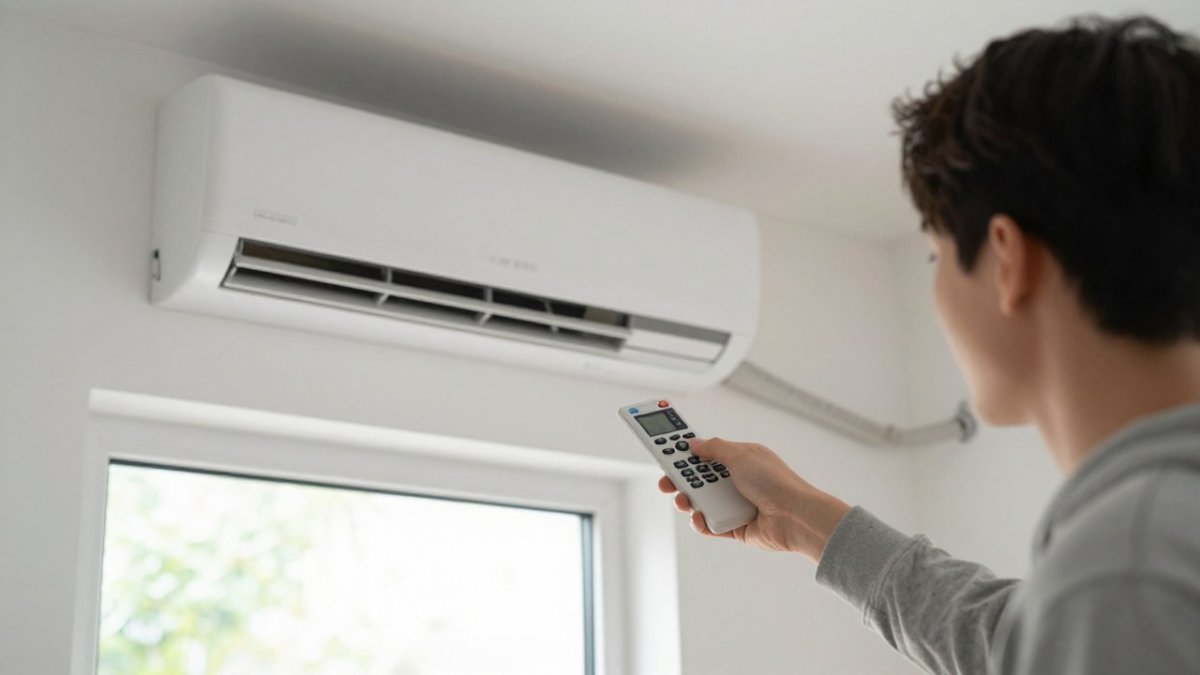
Efficiency is where the argument gets interesting. The International Energy Agency's Future of Cooling report notes that air conditioners and electric fans account for nearly 20% of electricity used in buildings worldwide. Run a system well and it earns its place. If heating is your main concern, our guide to choosing energy efficient heating compares the options.
Air Conditioning and Indoor Air Quality
Air conditioning and indoor air quality are linked through filtration and circulation, but the relationship is often overstated. Most units draw air through a filter that traps dust, pollen and larger airborne particles, then redistribute it around the room, which helps allergy sufferers and reduces the dusty, stuffy feeling in a closed-up house. Filtration is not ventilation: a system that recirculates indoor air will not lower carbon dioxide or dilute moisture unless a window is opened or mechanical ventilation is provided.
Be realistic about maintenance. A neglected filter can make air quality worse, not better, because it restricts airflow and can become a source of odour. Clean or replace filters as the manufacturer specifies, and arrange a professional service annually. If a room feels persistently damp or musty even with the system running, the cause is usually a ventilation or damp issue rather than filtration, so investigate before assuming air conditioning will solve it.
For planning advice before you buy, see how to plan home air conditioning installation. Regular residential air conditioning maintenance keeps performance where it should be, and our heating and boiler advice hub covers related comfort and ventilation topics. For advice on a system suited to your home, contact our team or use our online quote tool.
Air conditioning only pays off when the system suits the room, the insulation and how you actually live in the property. Get that wrong and you will spend more to stay less comfortable. B&G Jenkins has fitted heating and cooling systems since 1967, and we will size a system honestly rather than sell you the biggest unit on the shelf. Get an instant quote online in under two minutes, or contact the team for free, no-obligation guidance on the right option for your home.
Frequently Asked Questions
What are the main benefits of air conditioning at home?
The main benefits are year-round comfort, better sleep and easier humidity control. Surveys of heat and daily life have found that many people sleep worse and feel more fatigued in hot conditions. Air conditioning also filters and circulates air, which helps with dust and pollen. On the cost side, air-conditioning ownership can raise household electricity consumption, so efficient use matters.
Can air conditioning help improve indoor air quality?
Yes, to a point. Air conditioning and indoor air quality are linked because most systems pass air through a filter that traps dust, pollen and other airborne particles before circulating it back into the room. This can make a noticeable difference for allergy sufferers. The effect depends on filter condition, so clean or replace filters as the manufacturer advises. Filtration is not a substitute for ventilation, and no system removes every particle.
Does air conditioning also heat a home?
A reverse-cycle system does both. Air conditioning for heating and cooling means one unit can cool rooms in summer and warm them in winter by reversing the refrigeration cycle, which is essentially how a heat pump works. That makes it a genuine year-round option rather than a summer-only purchase. Suitability depends on your property, insulation and existing heating, so a survey is worth arranging before you commit.