
Heat Pump Efficiency in Cold Weather: A Homeowner's Guide
Last Updated: 24 November 2026
Quick Summary
A heat pump still works in cold weather, but its heat pump efficiency falls as outdoor temperatures drop, because it moves heat from outside air rather than creating it. Research in the journal Joule found heat pumps are efficient across mild and cold climates, though performance changes below 0°C.
- Check the manufacturer's stated operating limits and ask your installer how the system copes on your coldest nights.
- Defrost cycles are normal in damp, near-freezing conditions and usually last a few minutes.
- Ice persisting for hours or thick ice around the casing or drain needs professional attention.
- Lower flow temperatures generally improve cold-weather performance, so check whether your radiators suit them.
- Keep the outdoor unit clear after snow and avoid switching the system off and on during cold snaps.
Table of Contents
- How Well Does a Heat Pump Work in Cold Weather?
- Heat Pump Defrost Cycles and Electricity Use in Cold Weather
- How to Improve Heat Pump Efficiency This Winter
- Frequently Asked Questions
How Well Does a Heat Pump Work in Cold Weather?
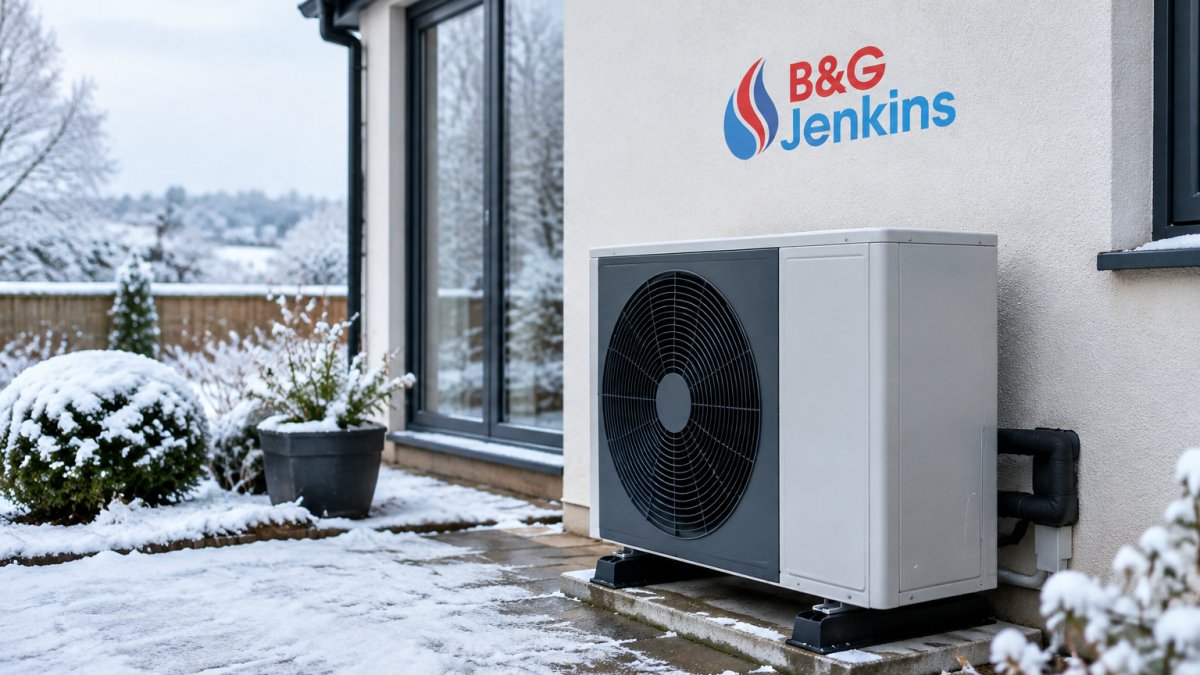
A heat pump still works in cold weather, but its efficiency falls as the outdoor temperature drops. Our heat pump value and suitability guide covers whether a heat pump is worth it for your home. An air-source heat pump takes heat from outside air and moves it indoors. Because it moves heat rather than creating it, the amount of usable heat it can extract depends on how much warmth is left in the air.
Research published in the journal Joule found that heat pumps are an efficient heating option across mild and cold climates, though performance changes below 0°C. Researchers reporting on heat pump efficiency at low temperatures in Joule
Check the manufacturer's stated operating limits and ask your installer how the system will cope on your coldest nights.
Heat Pump Defrost Cycles and Electricity Use in Cold Weather
In cold, damp air, moisture can freeze on the outdoor coil. Frost blocks airflow and reduces heat absorption, so the unit periodically runs a defrost cycle to clear it, normal cold-weather operation, not a fault.
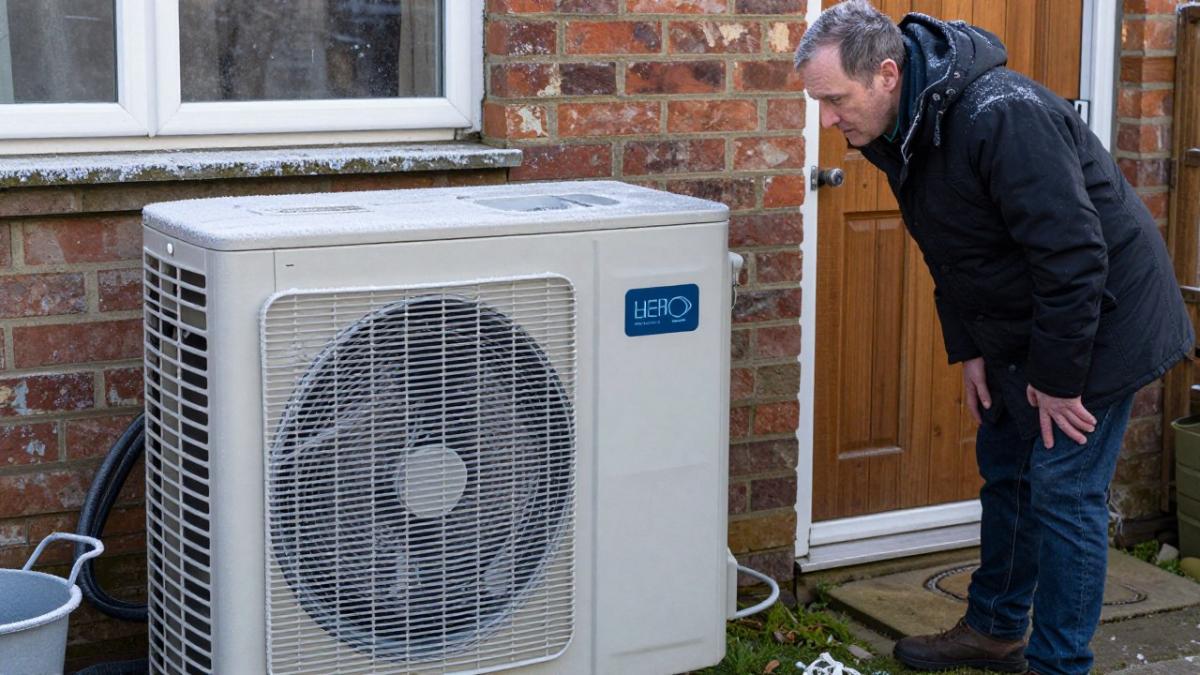
During defrost, the system briefly reverses refrigerant flow to warm the outdoor coil and melt frost. The indoor fan usually stops, and you may hear a whoosh or gurgle, see water vapour rise, and notice water draining. Defrosts usually last a few minutes and may run several times a day in damp, near-freezing conditions, so electricity use can rise slightly.
A few practical checks help defrosting work as intended:
Watch out: if ice persists for hours, the unit stays in defrost mode for long periods, or thick ice forms around the casing and drain, that points to a fault such as a blocked drain, sensor issue or low refrigerant, and needs professional attention.
If you are concerned about defrosting, drainage or airflow, contact the B&G Jenkins team to talk through what you are seeing and hearing. You can also start with our online boiler quote tool.
The table below sums up what to expect during a defrost cycle and when to call for help.
| Situation | What it means | What to do |
|---|---|---|
| Brief defrost cycle | Normal cold-weather operation | No action needed |
| Whoosh, gurgle or water vapour | Part of the defrost process | Expect this during defrost |
| Defrosts several times a day | Common in damp, near-freezing conditions | Electricity use may rise slightly |
| Ice persists for hours | Possible fault | Contact a professional |
| Thick ice around casing or drain | Possible blocked drain, sensor issue or low refrigerant | Contact a professional |
How to Improve Heat Pump Efficiency This Winter
Small checks help, but cold-weather efficiency is largely decided by how the whole system was designed and set up.
Start with the basics:
A heat pump works most efficiently at lower flow temperatures, so know what yours is set to and whether your emitters are sized to deliver enough heat at that temperature. Our heat pump maintenance guide explains the practical servicing steps that keep it performing well through winter. If radiators were sized for a boiler and run hot, the heat pump works harder than it should; a room-by-room heat-loss calculation at design stage tells an installer what flow temperature the system can run at.
Weather compensation adjusts flow temperature to outdoor temperature, and steady low-level operation is generally more efficient than short bursts of high demand. Our guide to reducing boiler energy bills with smarter settings shows how to set your controls to cut running costs. Compare electricity use across similar cold days and look for sudden jumps that do not match the weather; a modest rise in defrost-heavy spells is normal, but a sharp sustained rise with the house struggling to reach temperature is worth investigating.
For cold snaps, know how any supplementary or backup heating works, avoid switching the system off and on, and keep the outdoor unit clear after snow. If you are unsure whether a heat pump suits your property, our team at B&G Jenkins can help, find out more about heat pump installation.
Have an older heating system you're unsure about? Our team at B&G Jenkins can advise you on the right solution for your home in Swindon. Request your boiler quote today.
Frequently Asked Questions
Are heat pumps efficient in cold weather?
Heat pumps still produce heat in cold weather, but their efficiency falls as outdoor temperatures drop. An air-source heat pump extracts heat from outside air, and there is less heat to extract when it is near or below freezing. Performance also depends on the model and how the system is set up. Modern cold-climate models are designed to keep working in low temperatures. The best way to judge your own system is to check how it performs over a full winter, and to ask your installer to review the flow temperature and controls.
Do heat pumps use more electricity in winter?
Yes, a heat pump usually uses more electricity in winter because the home needs more heat and the unit works harder to extract it from colder air. The amount depends on how well the house is insulated, the flow temperature the system is set to, and how often the defrost cycle runs. Keeping the flow temperature as low as your radiators or underfloor heating allow, and making sure the home retains heat, will help control electricity use. Our team can review your settings if your bills seem higher than expected.
Why does a heat pump stop briefly to defrost?
When outdoor temperatures are low and humid, frost can build up on the outdoor unit's coil. The heat pump reverses briefly to melt the frost, which is known as a defrost cycle. This is a normal part of operation and usually lasts only a few minutes. Keep the outdoor unit clear of snow, leaves and debris so air can flow freely. If defrosting seems frequent or the unit is icing up heavily, contact B&G Jenkins for a check.